
A client came to me with $80,000 in capital and a clear goal: own five rental properties within three years without waiting to save a new down payment for each one. He didn’t want to flip. He wanted long-term cash flow and equity — just faster than the traditional buy-and-hold model allows. The answer was the BRRRR method, structured right from the beginning.
BRRRR method financing is the backbone of one of the most powerful wealth-building strategies in residential real estate investing. But it only works if you understand the loan products that power each phase — and how to sequence them correctly.
What you’ll learn in this guide:
- What BRRRR is and why the financing structure matters more than the acronym
- The acquisition loan options (bridge, hard money, fix-to-rent)
- How the DSCR cash-out refinance works as the exit loan
- The critical role of seasoning requirements in your timeline
- The math behind capital recovery, with a worked example
- What trips up most first-time BRRRR investors
What Is the BRRRR Method?
BRRRR stands for Buy, Rehab, Rent, Refinance, Repeat. The strategy works like this:
- Buy a distressed or undervalued property at a discount to its after-repair value (ARV)
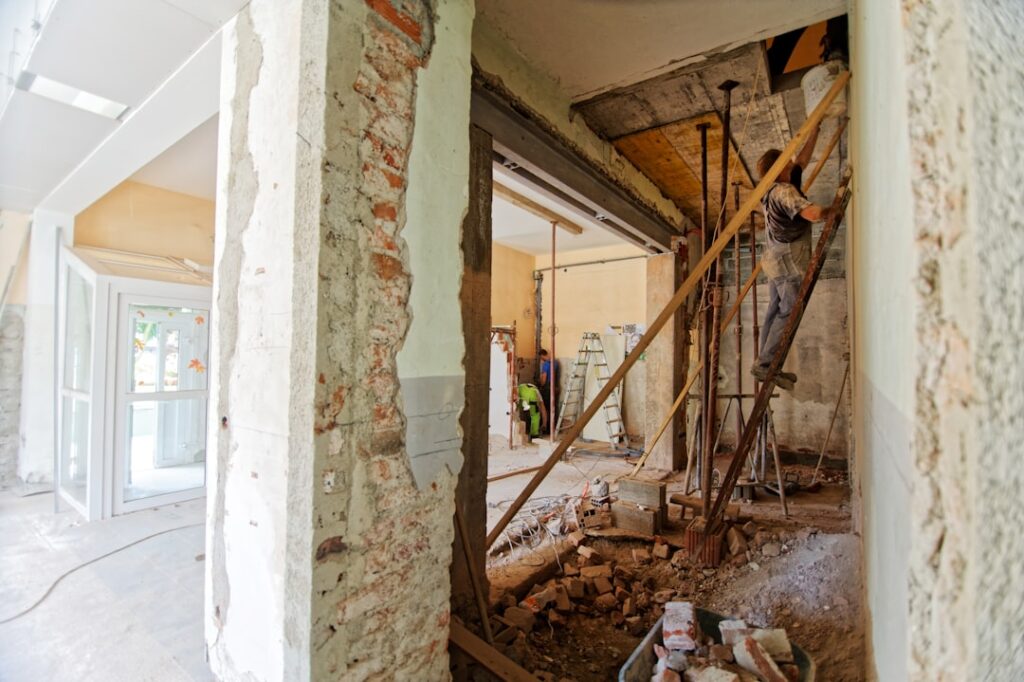
- Rehab it to increase appraised value and rental appeal
- Rent it to a qualified tenant at market rate
- Refinance into a long-term loan based on the property new value and pull back as much of your original capital as possible
- Repeat with the recovered capital
The key insight is that you’re not parking capital — you’re recycling it. If executed well, you can complete a full cycle and redeploy a significant portion of your cash into the next deal while holding a cash-flowing rental asset.
This is fundamentally different from traditional buy-and-hold, where your down payment stays locked in the property indefinitely. It’s also different from flipping, where you exit the property and pay taxes on the gain. BRRRR converts a distressed property into a long-term rental asset while recovering capital through debt rather than a sale.
The Two Loans That Power BRRRR Method Financing
Most BRRRR investors use two loan products in sequence: a short-term bridge loan (sometimes called a fix-and-flip or hard money loan) for the buy and rehab phases, and a DSCR cash-out refinance for the refinance phase.
Getting both of these right — and understanding how they interact — is the actual skill in BRRRR investing. The rehab work gets the attention, but the financing structure determines whether the deal actually works.
Phase 1: The Acquisition and Rehab Loan
The purchase and renovation are typically financed through a short-term bridge or fix-and-flip loan. This is a non-QM product designed for investors — no personal income verification, fast closing (often 7–14 days), and a loan structure that accounts for the renovation budget through a draw schedule.
Typical parameters for a BRRRR bridge loan in 2026:
| Parameter | Typical Range |
|---|---|
| Loan-to-purchase price | 85–90% |
| Renovation financing | Up to 100% of rehab budget |
| Max loan-to-ARV | 70–75% |
| Term | 12–24 months |
| Payments | Interest-only |
| Rate | 9–12% plus 1–3 points |
| Closing speed | 7–14 days |
The rate sounds high compared to long-term debt — and it is. But bridge loans are tools, not permanent financing. If your full cycle takes six to nine months, you’re paying that higher rate for a short window. The math usually works.
One thing I always tell clients: your bridge loan term needs to cover your full BRRRR timeline with margin. That means the rehab period, lease-up, any seasoning requirement on the DSCR refinance, and the refinance closing itself. A 12-month bridge term is often tight. An 18–24 month term gives you room to absorb delays without paying extension fees.
We offer fix-and-flip and bridge financing through our lender network for most property types, including 1-4 unit residential and small mixed-use. For more on what lenders look at during the acquisition phase, see our fix-and-flip loan requirements guide.
Phase 2: The DSCR Refinance
This is where BRRRR actually pays off — and where most investors either win or leave money on the table.
Once the property is rehabbed, rented, and (if required) seasoned, you refinance the bridge loan into a long-term DSCR loan. The DSCR loan qualifies based on the property rental income rather than your personal tax returns or W-2s. For investors who are self-employed, have maxed their conventional DTI, or are scaling beyond what traditional underwriting allows, this is the right tool.
The cash-out DSCR refinance pays off your bridge loan balance and returns the difference to you in cash — that is your capital recovery.
Key DSCR cash-out refinance parameters in 2026:
| Parameter | Typical Range |
|---|---|
| Max LTV (cash-out) | 70–75% of appraised value |
| Min DSCR | 1.0 (rental income divided by PITIA payment) |
| Min credit score | 620–660 |
| Seasoning | 0–6 months (program-dependent) |
| Income documentation | None — property income only |
| Loan term | 30-year fixed or 5/1 ARM |
| Rate (mid-2026) | 7.25–8.5% depending on LTV, DSCR, credit |
The maximum LTV on cash-out is typically 75% for single-family and 70% for 2–4 unit properties. Some programs go to 80% for borrowers with 740+ credit and DSCR above 1.25. Multifamily (5+ units) has lower LTV caps and falls into a different loan category entirely.
Most lenders I work with require a minimum DSCR of 1.0 — meaning monthly rent must at least equal the projected PITIA payment on the new loan. The sweet spot for pricing and leverage is 1.15–1.25. If your rental income produces a DSCR below 1.0, you either need to increase rents, reduce the loan amount, or accept a different structure.
The Capital Recovery Math: A Worked Example
Here’s a simplified BRRRR deal to show how the numbers flow:
- Purchase price: $130,000 (10% down = $13,000 cash)
- Bridge loan: $117,000 (90% of purchase)
- Rehab budget: $45,000 (funded via holdback draws)
- Holding costs (6 months at roughly 10.5%): approximately $9,800
- Total cash invested: approximately $67,800
- After-repair appraised value: $230,000
- DSCR refi at 75% LTV: $172,500
- Bridge loan payoff: approximately $162,000
- Cash back at closing: approximately $10,500 (before refi closing costs of $5,000–6,000)
- Net capital still in deal: approximately $62,000–63,000
You’ve created a property worth $230,000 with $57,500 in equity above the DSCR loan, generating monthly cash flow, with most of your original capital recycled for the next deal. Not a perfect 100% recovery — but a strong result with a performing asset as the output.
The deals where you recover 90–100% of capital require buying at 60–65% of ARV before renovation, tight rehab cost control, and a rental market that supports strong post-rehab rents.
Seasoning: The Detail Most Investors Miss
Seasoning refers to how long you must own the property before a DSCR refinance lender will accept the new appraised value — rather than the purchase price — as the basis for the loan. This is more nuanced than most guides acknowledge.
0-month seasoning programs exist and are ideal for BRRRR — you can refinance as soon as the property is stabilized and rented. The key constraint is that cash-out proceeds typically cannot exceed your documented purchase price plus renovation costs.
6-month seasoning is required by most programs if you want to borrow against the full appraised value regardless of your original costs — meaning you can pull out more than you put in.
In practice, if your ARV is strong relative to your project cost, 0-month programs usually return meaningful capital. If you’re targeting maximum cash-out, plan for a 6-month hold.
This is also where bridge loan term selection matters. If you’re using a 6-month seasoning program and your rehab takes four months, your bridge needs at least 10 months — plus time for DSCR underwriting. Plan for 14–18 months minimum. For more on bridge loan timing, see our bridge loan guide for real estate investors.
What Trips Up Most First-Time BRRRR Investors
From a recent deal: I worked with an investor last year who did everything right on the rehab — came in under budget, great tenant at market rent — but had targeted a DSCR refinance program with a 6-month seasoning requirement. His bridge loan was only 12 months. By the time the rehab was done and the tenant was placed, he had about 10 days before his bridge matured. We scrambled to get an extension, which cost him an extra 1.5 points. The deal still worked, but $4,000 evaporated that should have been avoided with better upfront planning.
The most common mistakes I see:
Overestimating ARV. Your DSCR loan amount is based on the appraisal, not your projection. Build your deal assuming the appraisal comes in 5–10% below your best-case estimate.
Underestimating rehab costs. Every dollar of cost overrun reduces capital recovery. Budget a 10–15% contingency and track actuals against budget weekly.
Not verifying rental demand before you buy. The DSCR refinance depends entirely on market rent. If the area can’t support rents that produce a 1.0+ DSCR on your projected loan amount, the strategy breaks before it starts.
Choosing the wrong bridge loan term. Map your full timeline — rehab, lease-up, seasoning, refinance — before you select your bridge term. Add two months of buffer.
Looking at a fix-and-hold deal using the BRRRR strategy? We work with investors nationally on both the acquisition bridge financing and the DSCR refinance. Schedule a 15-minute call
How BRRRR Fits Into a Broader Investment Strategy
BRRRR works best as a portfolio-building strategy for investors targeting buy-and-hold cash flow. According to the Mortgage Bankers Association quarterly commercial and multifamily originations index, commercial mortgage volume is projected to increase 27% in 2026, reflecting strong investor appetite for income-producing properties. BRRRR is one of the primary ways residential-scale investors participate in that growth without institutional capital.
One important distinction on scope: BRRRR with 1-4 unit properties uses the loan products described in this post. If you’re doing BRRRR on multifamily properties — 5+ units — the refinance product shifts to commercial or agency multifamily financing with different underwriting criteria. Per Freddie Mac investment property guidelines, the eligibility and documentation requirements differ materially between 1-4 unit and larger properties.
Frequently Asked Questions
What credit score do I need to do BRRRR?
Most bridge and hard money lenders require a minimum 620–640 FICO. DSCR refinance programs have similar floors, with the best rates and LTV available at 720+. I usually see borrowers around 680 get reasonable pricing on both sides of the transaction.
Can I do BRRRR without any cash?
Not realistically. Even with 90% LTC bridge financing, you’ll need cash for the down payment, closing costs, carrying costs, and reserves. In most markets, budget at least $30,000–$50,000 minimum per deal.
Does the DSCR refinance require a lease in place?
Most programs require a signed lease and evidence of occupancy. Some will accept a market rent appraisal for vacant properties, but you’ll get a lower LTV. Having a tenant in place is the cleaner path.
How many BRRRR deals can I run at once?
Most investors starting out should run one deal at a time until the cycle is dialed in. Once you’ve completed two or three full cycles, running two or three simultaneously is manageable with the right systems in place.
Ready to Finance Your BRRRR Deal?
We work with residential investors nationally on bridge-to-DSCR transactions — from the initial acquisition financing through the DSCR refinance. We can usually quote bridge financing within 24 hours and have active DSCR lender relationships across most 1-4 unit property types and markets.
Send us your scenario and we’ll come back with realistic terms — not a rate sheet, an actual structure for your deal.
This article is for informational purposes only and does not constitute financial, legal, or tax advice. Loan terms, rates, and availability vary by borrower, property, and market conditions. Consult Willowbrook Capital for scenario-specific guidance.
