
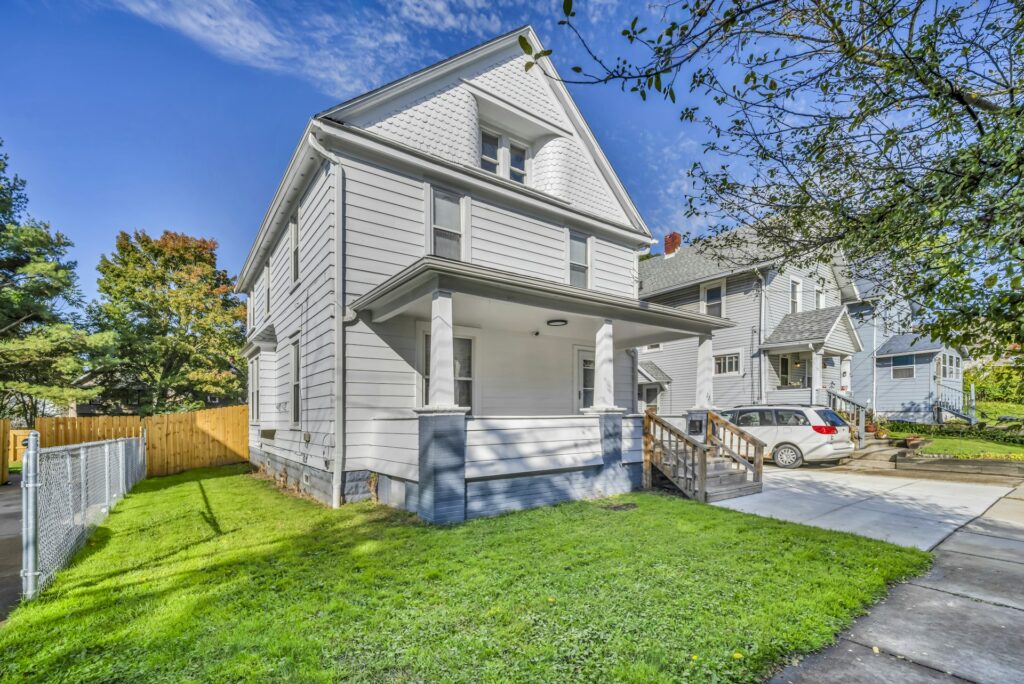
You found a tired three-bedroom in a solid rental neighborhood. It needs $45,000 of work, and once it’s done you want to keep it, not sell it. A standard flip loan assumes you’ll sell. A standard rental loan won’t touch a house that can’t be rented yet. A fix-to-rent loan is built for the gap between the two.
Here’s how fix-to-rent financing works in late 2026, the two ways lenders structure it, how the refinance gets sized, and where I see investors lose money on the back end.
What you’ll learn:
- What a fix-to-rent loan is and how it differs from a fix-and-flip loan
- The two-loan structure vs. a single-close rehab-to-rental loan
- How lenders size the permanent loan on rent and after-repair value
- Why conventional cash-out is usually the wrong exit for a rehab
What Is a Fix-to-Rent Loan?
A fix-to-rent loan finances the purchase and renovation of a 1-4 unit investment property, then converts or refinances into long-term rental debt once the work is done and the property is leased. The short-term piece behaves like a rehab bridge loan. The long-term piece is almost always a DSCR loan that qualifies on the property’s rent, not your personal income.
It’s the financing behind the buy, renovate, rent, and refinance strategy. If you want the strategy side in more detail, our post on BRRRR method financing covers it. This post is about the loan itself.
The key difference from a flip loan is the exit. A flip lender gets repaid from a sale. A fix-to-rent lender gets repaid from a refinance, so the whole deal is underwritten around whether the finished property will support long-term debt.
How Does Fix-to-Rent Financing Work?
There are two ways to structure it. Both get you to the same place, but the tradeoffs are real.
Option 1: Two loans (rehab bridge, then DSCR refinance)
You close a short-term rehab loan to buy and renovate. Most run 12 to 18 months, interest-only, with rehab funds held back and released through draws. Once the work is finished and a tenant is in place, you refinance into a 30-year DSCR loan and pay off the bridge.
This is the most common route and the most flexible. You can shop the refinance when you get there, and if the market or your plans change, you can still sell. The cost is two sets of closing fees, two appraisals, and rate risk on the second loan.
Option 2: Single close (rehab-to-rental in one loan)
Some lenders in our network offer one loan that covers the purchase, the rehab, and the permanent term. You close once. After the renovation is complete and the property is leased, the loan converts to its long-term phase, usually with a fresh valuation to confirm the numbers.
One closing saves money and takes the refinance risk off the table. The catch is less flexibility. You’re committed to that lender’s permanent terms, and many single-close programs carry prepayment penalties on the rental phase from day one.
| Feature | Two-Loan Structure | Single-Close Fix-to-Rent |
|---|---|---|
| Closings | Two | One |
| Rehab phase | 12-18 months, interest-only | Built into the loan, interest-only |
| Permanent phase | New DSCR loan, shopped at refi | Pre-set terms, converts after lease-up |
| Closing costs | Higher (two sets) | Lower |
| Rate risk at refi | Yes | Mostly locked or pre-defined |
| Option to sell instead | Easy | Possible, often with a prepay cost |
| Best for | Experienced investors, uncertain exits | Investors certain they’ll hold |
What Are Typical Fix-to-Rent Loan Terms?
These are the working ranges I’m seeing on clean files right now. Your terms will move with experience, credit, and the property.
- Rehab phase leverage: up to 85-90% of purchase price and up to 100% of rehab costs, capped at roughly 70-75% of after-repair value (ARV)
- Rehab phase rate: about 10-12% interest-only, plus 1-2 points
- Permanent phase: 30-year term, fixed or hybrid, typically 7.25-8.5% depending on DSCR, credit, and leverage
- Permanent leverage: up to 75% LTV on a rate-and-term or cash-out refinance, 70% on some 2-4 unit files
- DSCR minimum: 1.0x for most programs, with better pricing at 1.20x and up
- Credit: 660-680 minimum, best pricing at 720+
- Borrower: LLC or other entity, business-purpose only, no owner-occupancy
For context on where long-term money sits, Freddie Mac’s Primary Mortgage Market Survey put the 30-year fixed average at 7.11% for the week of November 12, 2026, its fourth straight weekly decline. That survey tracks owner-occupied conventional loans, so DSCR pricing runs higher, but the direction is the same and it helps the refinance math.
How Is the Refinance Sized?
This is where fix-to-rent deals are won or lost. At the refinance, the lender looks at two numbers and lends on whichever is lower.
Value test. The new appraisal sets the as-improved value. At 75% LTV on a $280,000 appraisal, the maximum loan is $210,000.
Cash flow test. The lender divides market rent (or the lease rent, if lower) by the full monthly payment, including principal, interest, taxes, insurance, and any HOA. If rent of $2,150 covers a $2,000 payment, that’s a 1.075x DSCR. If the ratio falls below the program minimum, the loan shrinks until it fits.
In my experience, the cash flow test is what bites first. Investors underwrite the ARV carefully and then assume rent. Run the DSCR on the refi payment before you buy, using current rates and a real insurance quote, not last year’s numbers.
From a recent deal: I recently placed a refinance for an investor in the Birmingham area who bought a vacant brick ranch for $118,000 and put $42,000 into it on a rehab bridge. It appraised at $205,000 and leased at $1,650 a month. At 75% LTV the value test supported about $154,000, but at the rate he was quoted the DSCR came in just under 1.0x. We moved him to a DSCR program with a 10-year interest-only period, which got the ratio to about 1.05x, cleared the program minimum, and paid off the bridge in full with less than $15,000 of his own cash left in the property.
Looking at a rehab you plan to keep as a rental? We structure fix-to-rent deals nationally. Schedule a 15-minute call →
Why Conventional Cash-Out Is Usually the Wrong Exit
A lot of investors plan to refinance their rehab loan into a conventional investment property mortgage because the rate is lower. Most of the time the timing doesn’t work.
Under Fannie Mae’s cash-out refinance rules (Selling Guide B2-1.3-03, published November 4, 2026), an existing first mortgage being paid off with a cash-out refinance must be at least 12 months old, measured note date to note date. At least one borrower must also have been on title for six months. A 12-month rehab loan matures right around the time you’d first be eligible.
Conventional loans also count against your personal debt-to-income ratio and cap the number of financed properties you can hold. That’s why DSCR is the default exit for a fix-to-rent loan. Many DSCR lenders will refinance after three to six months of ownership and size off the new appraisal, though rules vary. Our guide to DSCR loan seasoning walks through those timelines.
Who Is a Fix-to-Rent Loan Right For?
Fix-to-rent financing fits best when:
- You’re buying below market and the renovation creates real value, not just cosmetic updates
- The finished property rents for enough to cover a 30-year payment at today’s rates
- You have reserves to carry the property through rehab and two to three months of vacancy
- You plan to hold for at least three to five years
It’s a weaker fit for heavy structural rehabs where the budget could swing 30%, or for markets where rents barely cover taxes and insurance. If you’re still learning what rehab lenders look for, start with our fix and flip loan requirements guide. The rehab phase underwrites the same way.
Frequently Asked Questions
What is the difference between a fix-to-rent loan and a fix-and-flip loan?
A fix-and-flip loan is repaid by selling the property. A fix-to-rent loan is repaid by refinancing into long-term rental debt, so the lender also underwrites whether the finished property’s rent can support a permanent loan.
Can a fix-to-rent loan cover 100% of rehab costs?
Yes, many programs fund up to 100% of the renovation budget through draws, as long as the total loan stays under the lender’s ARV limit, usually 70% to 75%.
How soon can I refinance a fix-to-rent property into a DSCR loan?
Many DSCR lenders will refinance once the rehab is complete and a lease is signed, often within three to six months of purchase. Some require longer seasoning to use the appraised value instead of your cost basis.
Do I need rental experience to get a fix-to-rent loan?
Not always. First-time investors can qualify, but expect lower leverage on the rehab phase and a closer look at your contractor, budget, and reserves.
Ready to finance your fix-to-rent property?
We’re a commercial mortgage brokerage serving investors and developers nationally, with active lender relationships across rehab bridge, single-close rehab-to-rental, and DSCR programs. Send us your scenario and we’ll respond within one business day with realistic terms.
This article is for informational purposes only and does not constitute financial, legal, or tax advice. Loan terms, rates, and availability vary by borrower, property, and market conditions. Consult Willowbrook Capital for scenario-specific guidance.
