
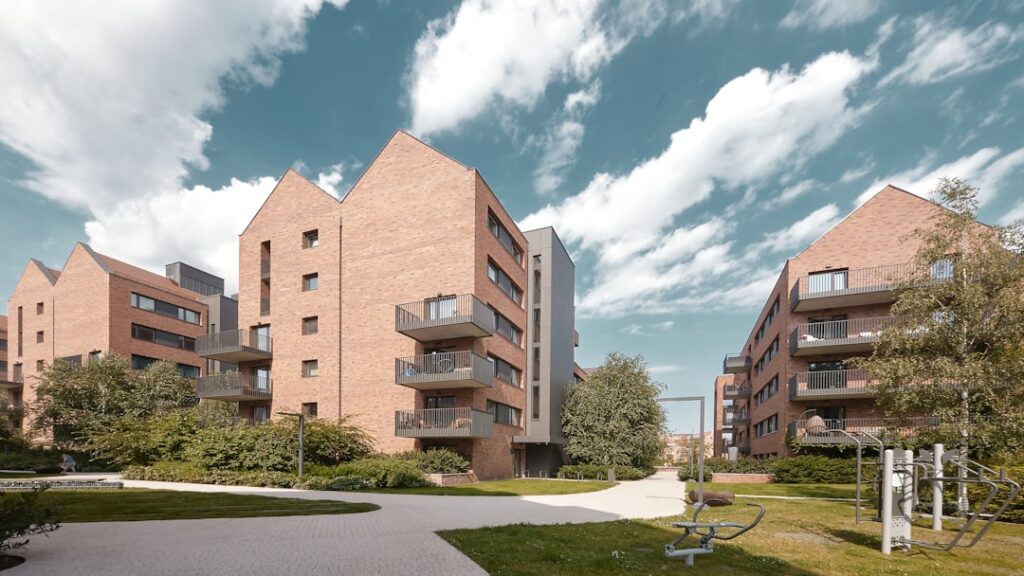
Apartment owners who bought or built in the last three to five years are sitting on equity they could be redeploying right now. A multifamily cash-out refinance replaces your existing loan with a larger one, and you pocket the difference — no sale, no capital gains event, no handing over the asset. Whether you want to fund a renovation, buy another building, or buy out a partner, this is how experienced investors recycle capital without giving up the income stream.
According to the Mortgage Bankers Association, commercial and multifamily mortgage originations rose 52 percent in Q1 2026 compared to Q1 2025 — and a significant share of that volume is refinance activity driven by equity extraction on stabilized assets. Here’s what lenders actually require in 2026 and how to structure the transaction correctly.
What You’ll Learn
- How a multifamily cash-out refinance works and when it makes sense
- The critical difference between 2-4 unit and 5+ unit loan programs
- Maximum LTV limits by loan type and current rate ranges
- DSCR, credit score, and seasoning requirements
- What documentation lenders need and how we structure these deals nationally
What Is a Multifamily Cash-Out Refinance?
A cash-out refinance replaces your existing mortgage with a new, larger loan. The difference between the old payoff and the new loan amount — minus closing costs — lands in your account as cash. The property stays in your portfolio; you keep the income stream and the future appreciation.
On a multifamily property, this works the same way in principle, but the underwriting mechanics shift depending on your unit count, the existing loan type, and which capital channel you’re using. The distinction that matters most is whether your property has 2-4 units or 5+ units. These two categories route through fundamentally different loan programs with different requirements, timelines, and documentation.
The Unit-Count Split: 2-4 Units vs. 5+ Units
For 2-4 unit investment properties, you can use DSCR financing — a non-QM product that qualifies on the property’s rental income rather than your personal tax returns. These loans underwrite similarly to residential mortgages, close in 18-30 days for clean files, and don’t require business financials.
Once your property crosses into 5+ units, it becomes a commercial asset for underwriting purposes. That means you’re routing through agency programs (Fannie Mae, Freddie Mac small loan), HUD, CMBS, life company, or bank portfolio. The loan qualifies on net operating income (NOI) and property-level debt service coverage. Underwriting is heavier, documentation more extensive, and timelines run 45-75 days.
Most agency programs for 5+ units have a minimum loan size in the $750K-$1.5M range depending on the program. For smaller apartment buildings where agency doesn’t pencil, community bank or credit union portfolio financing often fills that gap.
LTV Limits: How Much Can You Pull Out?
This is where most borrowers get surprised. Cash-out leverage is consistently tighter than purchase leverage on the same property type. Here’s what to expect by loan channel:
| Loan Type | Property | Max Cash-Out LTV | Min DSCR |
|---|---|---|---|
| DSCR / Non-QM | 2-4 unit | 70-75% | 1.0x (some lenders go lower) |
| Freddie Mac Small Balance | 5-50 units | 75% | 1.20x |
| Fannie Mae / Freddie Mac standard | 5+ units | 75-80% | 1.25x |
| CMBS | 5+ units | 65-70% | 1.20-1.25x |
| Bank / Portfolio | 5+ units | 65-75% | 1.20-1.30x |
A handful of aggressive DSCR lenders in our network will go to 80% on 2-4 unit cash-out for borrowers with 740+ credit and strong DSCR, but that’s the exception. Plan around 70-75% as your working assumption when running the numbers.
On current rates: in mid-2026, agency multifamily programs are pricing roughly 5.50-7.25% depending on loan size, term, and market. DSCR cash-out on 2-4 unit properties runs 50-100bps higher than purchase rates for the same file — call it 7.00-8.50% depending on LTV and credit.
DSCR and Income Requirements
For DSCR programs (2-4 units), the lender cares about one ratio: does the rental income cover the new payment? Most lenders I work with want a minimum 1.0x DSCR — meaning gross rent equals or exceeds PITIA (principal, interest, taxes, insurance, and association dues if applicable). Some will go below 1.0x if credit and reserves are strong, but LTV compresses to 65-70% in those scenarios.
Credit minimums run 660 at the floor, with most programs wanting 700+ to access the top LTV tiers. At 740+, you have the most flexibility across the DSCR lender landscape.
For 5+ unit agency programs, the analysis is property-level: lenders underwrite to NOI versus total debt service, typically requiring 1.20-1.25x coverage. Your personal income matters less; the rent roll and operating history matter more.
One thing that catches investors off guard: post-closing reserves. For cash-out refinances specifically, most lenders require 6-12 months of PITIA in reserves after closing. You’re pulling equity out — lenders want proof you can carry the larger payment through a vacancy period. Don’t plan to deploy the entire cash-out proceeds and leave zero reserves.
Seasoning: How Long Do You Need to Own the Property?
Most lenders want at least six months of seasoning before approving a cash-out refinance. This applies broadly across DSCR and agency programs.
Fannie Mae’s guidelines specifically require six months on title plus 12 months of seasoning on any existing first mortgage being paid off. If you recently acquired the property or completed a rate-and-term refinance, you’ll typically need to wait before accessing equity through a cash-out.
The exception: if you paid all-cash at acquisition, some lenders offer “delayed financing” immediately after closing to recapture your purchase equity. The loan amount is capped at the original purchase price plus any verified improvement costs, and you’ll need to document the source of the purchase funds.
What Investors Do with the Proceeds
The most common uses I see on these transactions:
- Renovations on the same property or a different asset in the portfolio
- Down payment on the next acquisition — recycling equity to scale without new outside capital
- Partner buyouts — one investor buys out another without triggering a full sale
- Reserve replenishment — restocking depleted reserves after a heavy rehab
- Bridge or construction loan payoff — exiting a higher-rate short-term loan into long-term financing
The BRRRR method — Buy, Rehab, Rent, Refinance, Repeat — is built entirely around this logic. You force equity through renovation, stabilize the property’s NOI, then pull cash out to fund the next deal. We’ve put together a full breakdown of BRRRR method financing if you want to see how that cycle works in practice.
From a recent deal: I recently structured a cash-out refinance for a client who owned a 12-unit apartment building in the Atlanta metro — purchased two years earlier for $1.1M, fully renovated, and appraised at $1.65M by the time we went to market. We placed a new first mortgage at 70% LTV through an agency small-balance program, generating roughly $235,000 in net cash-out proceeds after retiring the original acquisition bridge loan. The client deployed those proceeds as a down payment on a 20-unit building in the same submarket. Clean file, closed in 45 days from LOI.
Pulling equity out of a stabilized multifamily asset? We structure these deals nationally through agency, CMBS, and portfolio programs. Schedule a 15-minute call →
How to Qualify: What You Need to Bring
For a DSCR cash-out on a 2-4 unit property, the core package:
- Current rent roll and active lease agreements
- 12 months of bank statements (to verify reserves — not income)
- Property insurance declaration page
- Existing mortgage statement showing payoff amount
- Entity documents if the property is held in an LLC or trust
No tax returns. No W-2s. The lender underwrites on the rent roll and credit profile.
For 5+ unit agency refinances, add: trailing 12-month operating statements, detailed rent roll history, property management agreements, and any rent concession documentation. If you’ve been self-managing, get your books organized before applying. Agency underwriters will review every line of the operating history, and gaps or inconsistencies slow the process significantly.
We structure multifamily DSCR loans for 2-4 unit cash-out refinances and work across agency, CMBS, and portfolio programs for larger assets. For properties coming off a renovation or lease-up phase, see our guide on multifamily value-add financing — that context matters for how lenders underwrite the stabilized NOI. And if you’re comparing cash-out refi to other equity extraction strategies, the breakdown in our cash-out refinance on commercial property guide covers the broader commercial landscape.
Frequently Asked Questions
What is the maximum LTV on a multifamily cash-out refinance?
Most DSCR programs cap cash-out at 70-75% LTV on 2-4 unit investment properties. Agency programs for 5+ units (Freddie Mac, Fannie Mae) allow up to 75-80% LTV depending on the specific program and property characteristics. CMBS and bank portfolio loans typically cap at 65-75%.
Do I need to show personal income for a multifamily cash-out refinance?
Not on a DSCR product for 2-4 unit investment properties. These programs qualify on the property’s rent coverage ratio, not your W-2 or personal tax returns. For 5+ unit agency programs, underwriting centers on the property’s NOI rather than personal income, though you’ll still provide personal financial statements as part of the credit review.
How long do I need to own the property before cashing out?
Most lenders require at least six months of ownership seasoning. Fannie Mae’s guidelines specifically require six months on title plus 12 months of seasoning on any existing mortgage being paid off. If you purchased all-cash, some lenders offer delayed financing immediately post-closing to recapture your equity up to the original purchase price.
Can I do a cash-out refinance on an apartment building with 5+ units?
Yes. Properties with 5+ units use agency (Fannie Mae/Freddie Mac), HUD, CMBS, or bank portfolio programs. The underwriting methodology shifts from residential-style DSCR to commercial NOI analysis, documentation requirements are heavier, and timelines run longer. For a full overview of 5+ unit programs, see our multifamily financing guide for 5+ unit properties.
What are current rates for a multifamily cash-out refinance?
In mid-2026, agency multifamily programs are pricing in the 5.50-7.25% range depending on loan size, term structure, and market tier. DSCR cash-out on 2-4 unit properties typically runs 7.00-8.50% depending on LTV and credit. Bridge-to-refi scenarios cost more — factor 9-12% for short-term debt you’re planning to exit into a permanent agency product.
Ready to Finance Your Multifamily Property?
We’re a commercial mortgage brokerage serving investors and developers nationally, with active lender relationships across DSCR, agency multifamily, CMBS, and portfolio programs. Send us your scenario — we’ll respond within one business day with realistic terms.
This article is for informational purposes only and does not constitute financial, legal, or tax advice. Loan terms, rates, and availability vary by borrower, property, and market conditions. Consult Willowbrook Capital for scenario-specific guidance.
