
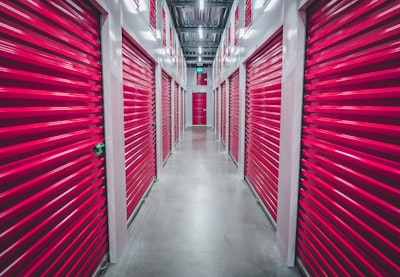
Self-storage is one of the few commercial property types where a recession makes the phone ring louder. People downsize, move, and declutter — and the units fill up. That resilience is well-documented, and it’s exactly why lenders from community banks to CMBS conduits to the SBA all have dedicated appetites for the asset class.
But qualifying for a self storage loan in 2026 looks different depending on whether you’re buying a stabilized facility, repositioning a value-add play, or breaking ground on a new climate-controlled project. The loan programs, requirements, and rate expectations vary considerably. Here’s what you need to know before you put a deal together.
What you’ll learn:
- The main self storage loan types: conventional, SBA, CMBS, and bridge
- What lenders actually underwrite — DSCR, LTV, occupancy, and market saturation
- When each program makes sense based on deal type and borrower profile
- How to position your deal for the best terms and fastest close
Why Lenders Like Self-Storage (and When They Don’t)
Self-storage has earned its reputation as a recession-resistant asset class. Occupancy held up through the 2008 financial crisis and the COVID disruption, and operating margins are among the highest in commercial real estate — low headcount, no tenant buildout allowances, simple management.
That said, lenders aren’t uniformly bullish on storage in 2026. Significant new supply entered the market across Sunbelt metros from 2022 through 2024, and some markets saw occupancy compress as that pipeline was absorbed. Per the Self Storage Association’s annual industry research, national average occupancy for stabilized facilities remained strong through 2024 before moderating in oversupplied submarkets.
Most lenders I work with now include a market saturation analysis as part of underwriting. They want to see the competitive landscape within a 3-5 mile radius, current rental rate comparables, and evidence the subject facility can sustain 85%+ economic occupancy. A climate-controlled facility in a supply-constrained suburb is a different underwriting story than one sitting in a market with three new Class A competitors delivering in the next 18 months.
What Types of Self-Storage Loans Are Available?
The right self storage loan depends on deal size, your role (owner-operator vs. passive investor), and where the asset sits in its lifecycle.
Conventional commercial loans (banks and credit unions) are the most common path for acquisition or refinance of a stabilized facility. Typical parameters: 65-75% LTV, 1.25x DSCR minimum, 5-10 year fixed term, 25-30 year amortization. Recourse to the borrower. Best for deals under $3-5M or where the borrower has an existing banking relationship.
SBA 504 and SBA 7(a) are available to owner-operators — meaning you run the storage business out of the facility rather than owning it as passive real estate. SBA unlocks higher leverage and longer fixed terms than most conventional lenders will offer.
CMBS (conduit) loans are non-recourse, come with longer fixed terms (typically 5-10 years), and are available for larger deals generally starting around $2M. CMBS lenders underwrite primarily on asset quality and cash flow rather than personal credit and net worth. The trade: yield maintenance or defeasance prepayment penalties make these loans inflexible if you plan to sell or refinance early.
Bridge loans are the right tool for value-add acquisitions, lease-up plays, or situations where the facility doesn’t yet meet stabilized underwriting standards. Interest-only, 12-36 month terms, significantly higher rates. We use bridge financing when a borrower is acquiring a 60%-occupied facility with a credible plan to reach 85% before refinancing into a permanent loan.
Ground-up construction loans for self-storage follow similar structures to other commercial construction — draws tied to milestones, typically 20-30% equity, and a realistic stabilization timeline built into the underwriting.
What Lenders Actually Look At
Self-storage underwriting is more straightforward than many commercial property types, but there are specific metrics every lender focuses on.
DSCR. Most lenders require a minimum 1.25x debt service coverage ratio, calculated on net operating income (gross revenue minus operating expenses, before debt service). Climate-controlled facilities with strong rent rolls can sometimes qualify at 1.20x, but 1.25x is the standard floor.
LTV. Conventional bank and credit union loans: 65-75% LTV. CMBS: 65-75%, sometimes 80% for institutional-quality assets. SBA 504: up to 85-90% combined (bank first + SBA second + 10-15% borrower equity). Bridge: 65-75% at close with potential future advances tied to occupancy milestones.
Occupancy. Stabilized underwriting generally requires 85%+ economic occupancy for the trailing 12 months. Anything below puts the deal in bridge territory unless the borrower has strong reserves and a documented management plan. Lenders also analyze unit mix separately — climate-controlled units command higher rents and lower vacancy in most markets.
Property condition. Self-storage facilities are operationally simple, and lenders know it. Unexplained deferred maintenance — worn pavement, failing security systems, roof issues — is a yellow flag because there’s no tenant-improvement excuse. Most lenders want functioning keypad access, adequate lighting, and a basic security camera system.
Market analysis. Lenders do their own competition mapping — come prepared with a 3-5 mile radius competitive survey, current rental rate comps for comparable units, and if occupancy has been below 85%, a clear explanation of why and what you’re doing about it.
SBA Loans for Self-Storage: 504 vs. 7(a)
SBA financing is often the most attractive option available to self-storage borrowers — but it only works for owner-operators. If you run the storage business out of the facility and that business generates at least 51% of the revenue, you’re eligible. Passive investors don’t qualify.
Under the SBA 504 program, a borrower can finance up to 85-90% of the purchase or construction cost: a conventional lender provides a first mortgage at roughly 50% of the project cost, the SBA provides a second mortgage at 35-40% through a Certified Development Company, and the borrower puts in 10-15% equity. The SBA 504 component is fixed for 25 years — one of the only long-term fixed-rate commercial real estate products available to small business borrowers.
Under the SBA 7(a) program, the full loan amount (up to $5M) flows through a single participating lender with SBA guarantee backing. Use of proceeds is more flexible: 7(a) can include working capital, business acquisition costs, and equipment alongside real estate. Rates are variable (Prime + negotiated spread) or fixed on shorter terms. 7(a) tends to move faster and involves less structural complexity than a 504 two-lender structure.
Both SBA programs require the business occupying the property to be the primary user. Pure passive investment in self-storage doesn’t qualify under either program, regardless of deal size.
CMBS Self-Storage Loans
CMBS is the natural fit for larger stabilized storage deals ($2M+ loan size) where the borrower wants non-recourse financing, long fixed terms, and doesn’t need prepayment flexibility.
What CMBS lenders want to see for self-storage:
- 90%+ economic occupancy at closing (some will accept 85% for institutional-quality assets)
- Minimum 1.25x DSCR on underwritten NOI
- Third-party appraisal, Phase I environmental, and property condition assessment
- LTV at or below 70-75%
- Demonstrated management track record or a qualified third-party management agreement
The advantage is non-recourse protection — if the deal goes wrong, the lender’s recourse is limited to the asset, not your other investments. CMBS also tends to price institutional-quality facilities well and can accommodate larger loan sizes than most community banks will hold.
The disadvantage is prepayment inflexibility. Yield maintenance and defeasance provisions can cost several percent of the loan balance if you need to exit in the first several years. If your plan involves a sale or refinance in the near term, CMBS is the wrong structure.
Looking at a self-storage acquisition, refinance, or value-add repositioning? We structure these deals nationally across conventional, CMBS, SBA, and bridge programs. Schedule a 15-minute call →
Bridge Loans for Value-Add Self-Storage
Not every storage deal comes in stabilized. A 60%-occupied facility in a strong market might make for a better acquisition than a fully-leased property at a compressed cap — you’re buying the upside. That’s where bridge lending fits in.
We structure bridge loans for self-storage when:
- The facility is in active lease-up (newly built or recently acquired at below-market occupancy)
- A new owner is repositioning with improved management, rebranding, or a unit rate reset to market
- Physical improvements are needed before the asset qualifies for permanent financing
- The borrower needs to close quickly and can’t wait for a full conventional or CMBS underwrite
Typical bridge parameters for self-storage: 12-36 month interest-only terms, 65-75% LTV at close, with potential future advances tied to occupancy milestones. Rates run 200-350 basis points above stabilized permanent rates.
The exit is almost always a conventional or CMBS refinance once the facility hits 85%+ occupancy and the trailing NOI supports stabilized underwriting. Lenders want to see that exit underwritten from day one.
From a recent deal: I structured a bridge loan for a 45,000-square-foot drive-up storage facility in a mid-size southeastern market where the seller had let occupancy drift to around 62% over two years of deferred management attention. The buyer’s plan was straightforward — bring in a third-party management company, push unit rents to market (they were running about 15% below comparable facilities), and repair the access gate system. We closed the bridge in 28 days. The borrower was targeting a 12-month refinance into a conventional bank loan once occupancy recovered past 85%.
How to Position Your Self-Storage Deal for the Best Terms
A few things I’ve consistently seen make the difference between a clean approval and a deal that drags out or gets re-priced:
Lead with the rent roll, not the appraisal. Lenders care about operating income. A complete trailing-12 rent roll, unit mix breakdown, and month-by-month occupancy trend tells your story more effectively than a proforma. Present them upfront in your loan package.
Know your competitive position. Map the facilities within 3-5 miles — unit mix, posted rates, and estimated occupancy. Lenders do this analysis anyway. If you’ve done it first, you come across as the operator who knows the market.
Separate climate-controlled from drive-up. On competitive deals, climate-controlled units underwrite better — higher unit rents, lower vacancy, stronger comparable support. If your facility has both unit types, present them separately.
Have your sponsor package ready. Global cash flow analysis, prior CRE experience summary, personal financial statement, and a clear written business plan. Storage loans close faster when the sponsor package is clean from the start.
For borrowers exploring bridge-to-perm exit structures, our guide to bridge loans for real estate investors covers short-term financing mechanics and permanent loan exits in more detail.
Frequently Asked Questions
What credit score do I need for a self-storage loan?
Conventional bank and credit union lenders generally want a minimum 680 credit score, with 700+ getting meaningfully better pricing. CMBS lenders focus more on asset quality and cash flow than personal credit. SBA loans require a minimum 680, though participating lenders often prefer 700+.
What DSCR is required to qualify for a self-storage loan?
The standard floor for most self storage loan programs is 1.25x, calculated on net operating income. Higher-quality assets or borrowers with strong reserves can sometimes qualify at 1.20x, but plan your underwriting around 1.25x unless your lender tells you otherwise.
Can I get an SBA loan for a self-storage facility I own as an investment?
No. SBA 504 and 7(a) require the business occupying the property to generate at least 51% of revenue — you must be the owner-operator. Passive investors use conventional bank loans, CMBS, or bridge financing depending on deal size.
What LTV can I expect for a self-storage loan?
Expect 65-75% LTV for conventional bank loans, up to 75% for CMBS, and up to 85-90% combined LTV on SBA 504 deals. Bridge loans may offer 70-75% LTV at close with future advance provisions tied to occupancy milestones.
How long does it take to close a self-storage loan?
Bridge loans from private lenders can close in 20-30 days. Conventional bank loans typically run 45-60 days. CMBS requires third-party reports and usually takes 60-90 days. SBA loans often take 60-90+ days depending on lender pipeline volume.
Ready to finance your self-storage facility?
We work with investors and operators acquiring, refinancing, and repositioning self-storage facilities nationally. Our lender network covers conventional banks, SBA lenders, CMBS conduits, bridge programs, and private credit — which means we can match your deal to the right capital source rather than forcing it through a single credit box.
Send us your scenario — we’ll respond within one business day with realistic terms.
This article is for informational purposes only and does not constitute financial, legal, or tax advice. Loan terms, rates, and availability vary by borrower, property, and market conditions. Consult Willowbrook Capital for scenario-specific guidance.
