
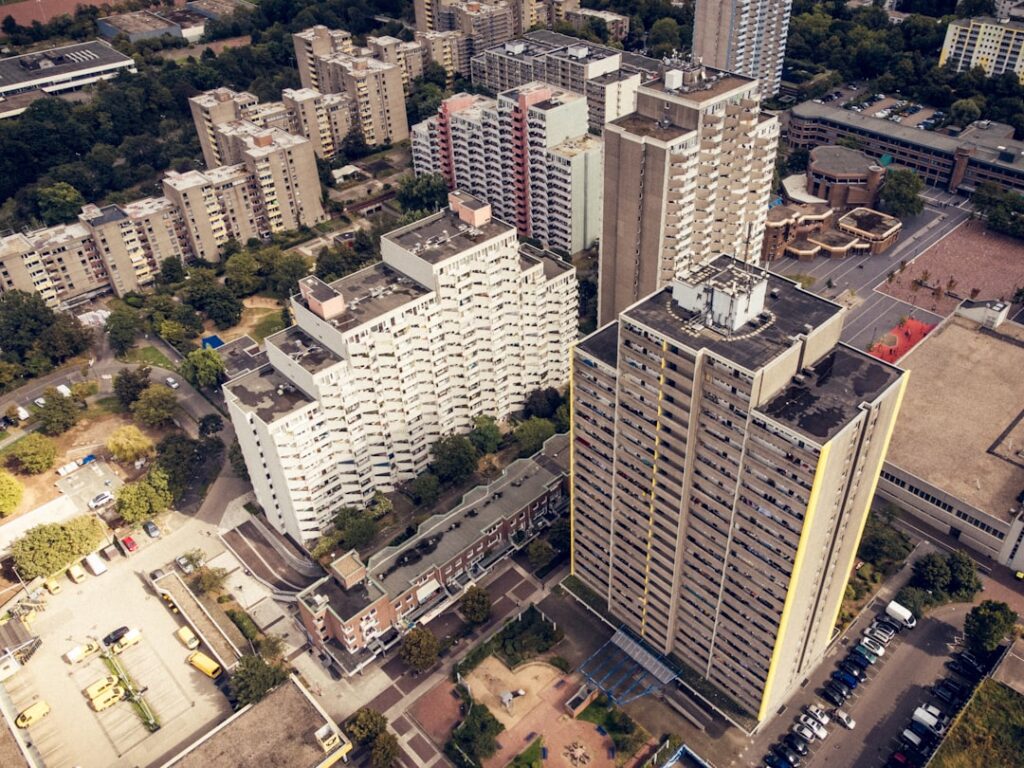
The Sunbelt apartment supply wave is finally cresting. After two years of record deliveries in markets like Austin, Dallas, and Tampa, new completions are falling sharply heading into the second half of 2026—and that shift matters if you’re trying to finance a Sunbelt multifamily investment right now.
The problem is the story isn’t uniform. Texas and Florida are not the same market. Charlotte and Austin are not the same opportunity. Lenders know this, and they’re pricing accordingly. Here’s what you need to understand before you commit to a loan structure.
What you’ll learn:
- How Texas, Florida, and the Carolinas differ heading into H2 2026
- What Fannie Mae and Freddie Mac are lending at today, and when they won’t work
- Bridge loan and DSCR alternatives for non-stabilized or smaller assets
- What underwriting criteria lenders are actually applying in this market
The Sunbelt Is Not One Market
The most expensive mistake I see investors make: treating the Sunbelt as a single investment thesis. Dallas and Charlotte may both be in the South, but their multifamily fundamentals look nothing alike right now.
Texas (Dallas, Houston, San Antonio): The long-term demographic story remains intact, but the supply punch is real. Dallas is running multifamily vacancy above 12%, Houston near 13%, with rents flat to negative year-over-year in both markets. Austin is the most oversupplied major market in the country. Effective rents have declined for more than 12 consecutive months. Lenders underwriting Texas deals are working conservatively: lower LTVs, higher DSCR floors, and close scrutiny of concession-adjusted rent rolls.
Florida (Tampa, Orlando, Jacksonville): The picture is cleaner than Texas for most metros outside Miami. These markets absorbed meaningful supply without seeing the delivery volumes that hit Dallas or Austin. Employment inflows from the Northeast continue, and rent stabilization is closer at hand. Tampa and Orlando offer the most credible near-term upside in the state.
The Carolinas (Charlotte, Raleigh): These are the standout performers in the Sunbelt right now. Charlotte leads all major U.S. metros in year-over-year employment growth at 2.7%, driven by financial services expansion and corporate relocation. Raleigh’s research and tech economy continues to absorb population. Vacancy is elevated in both markets, but job growth is the fuel that burns off excess supply faster than elsewhere.
The bottom line: which market you’re in shapes how lenders underwrite your deal. Geography isn’t just context—it’s a credit variable.
What the Supply Wave Has Done to Financing Terms
Lenders haven’t abandoned Sunbelt multifamily, but they’ve tightened their underwriting in ways that affect deal structure. The main shifts I’ve seen over the past 12-18 months:
- DSCR minimums have moved up. Most agency and bank lenders are holding at 1.20-1.25x DSCR on stabilized Sunbelt acquisitions, versus the 1.15-1.20x floors that were common a couple of years ago.
- LTV has compressed on value-add plays. If a property has significant vacancy or below-market rents, expect as-is valuation at 65-70% LTV rather than 75-80%.
- Concessions get scrubbed from revenue. Lenders in oversupplied markets are adjusting effective rents for concession packages. A property offering one to two months free on new leases doesn’t get to show gross asking rent as stabilized income.
- Reserve requirements have increased. Most lenders want 6-12 months of debt service in liquid reserves. In softer markets, the floor is closer to 12.
None of this makes deals unworkable. But your pro forma needs to be conservative and supportable, not aspirational.
Agency Financing: Fannie Mae and Freddie Mac in 2026
For stabilized multifamily assets—typically defined as 90%+ occupied for 90+ days—agency debt through Fannie Mae or Freddie Mac is usually the best available loan execution. Non-recourse, long-term fixed rates, and the deepest capital base in the market.
Where rates and terms sit in mid-2026:
- Fannie Mae fixed rates starting around 5.56%
- Freddie Mac in the 5.5-6.5% range depending on term, LTV, and property characteristics
- Maximum LTV: 80% on acquisitions, 75% on refinances
- Minimum DSCR: 1.25x
- Terms: 5, 7, 10, 12, or 15-year fixed; 30-year amortization available
The Federal Housing Finance Agency set each GSE’s 2026 multifamily lending cap at $88 billion—a combined $176 billion committed to the market. That’s a significant backstop, and it’s why agency pricing has stayed competitive even as bank balance sheets have tightened on CRE.
One program worth knowing: Freddie Mac’s Conventional Small Loan (renamed from the SBL Multifamily Loan in April 2026) covers loan amounts from $2 million to $10 million, with fixed-rate terms of 5, 7, 10, 12, or 15 years and up to 80% LTV. For smaller apartment acquisitions in Sunbelt submarkets, this is often the cleanest execution available.
For investors who need flexibility on income documentation, our multifamily DSCR loan program qualifies on property cash flow rather than W-2 or tax returns, with no agency stabilization requirements.
When Agency Doesn’t Work: Bridge Loans and DSCR Options
Not every Sunbelt multifamily deal qualifies for agency execution. Two scenarios where it breaks down most often:
Value-add acquisitions. If you’re buying a property at 70-75% occupancy to renovate and push rents, Fannie and Freddie won’t lend on it. You need bridge financing: typically 12-36 months of interest-only, floating rate, with the plan to refinance into agency or CMBS once the property stabilizes. Bridge rates in this market are running roughly 7.5-10% depending on the lender, LTV, and asset quality.
Properties below the agency minimum loan size. For loans under $2 million, most agency programs become uneconomical. Non-agency DSCR financing is often the better path here, qualifying on property income with LTV in the 70-75% range and rates in the 7.5-8.5% neighborhood for clean files.
We work with lenders across bridge, DSCR, CMBS, and agency programs. The right structure depends entirely on the asset and where it is in its business cycle.
A Deal That Illustrates the Difference
From a recent deal: I worked a bridge-to-agency takeout for a 22-unit apartment building in the Charlotte metro. The sponsor acquired the property at 78% occupancy and needed 18-24 months to complete unit renovations and push effective rents to market. The bridge priced at roughly SOFR plus 375 bps, which came in around 9% at close. Once the property hit 93% occupancy and held it for 90 days, we refinanced into a 10-year Fannie Mae fixed at 5.7%, non-recourse, 30-year amortization. The bridge was expensive. That’s always the trade. But Charlotte’s employment fundamentals made the lease-up thesis credible to the bridge lender in a way it wouldn’t have been in Austin or Dallas right now.
Looking at a multifamily acquisition or refinance in a Sunbelt market? We structure these deals nationally and have active lender relationships across bridge, agency, DSCR, and CMBS programs. Schedule a 15-minute call →
How to Position Your Deal Before You Shop It
A few things that move the needle when lenders are underwriting Sunbelt multifamily in this environment:
Get the trailing 12-month rent roll in order. Lenders underwrite T12 income, not pro forma. Include unit-by-unit detail with move-in dates, concession schedules, and lease expirations. The cleaner the documentation, the better the terms.
Understand your submarket’s supply pipeline. In oversupplied markets, context helps. A brief summary of what’s coming online in your specific submarket, and why your property’s performance will hold up through lease-up, can materially improve how a lender reads the deal.
The broader capital market is favorable for multifamily right now. Per the Mortgage Bankers Association’s 2026 CREF Forecast, total commercial mortgage originations are expected to hit $805 billion this year, with multifamily accounting for $399 billion of that. Capital availability isn’t the issue. Matching your deal to the right lender is.
We’ve structured bridge loans for value-add investors and placed DSCR deals on stabilized rentals across Sunbelt markets. What makes sense depends on the asset, the market, and the business plan.
Frequently Asked Questions
What DSCR do I need for a Sunbelt multifamily loan in 2026?
Agency lenders (Fannie Mae, Freddie Mac) require a minimum 1.25x DSCR on stabilized properties. Non-agency DSCR lenders may go to 1.0x for well-located assets with strong credit profiles. In oversupplied Sunbelt markets, some non-agency lenders are also holding closer to 1.25x on acquisitions.
Can I get an agency loan on a Sunbelt apartment with high vacancy?
No. Agency lenders require stabilization (typically 90% occupancy for 90+ days) before they’ll lend. Properties below that threshold need bridge financing first, with agency debt as the permanent takeout once the property qualifies.
Are bridge loans available for Sunbelt value-add multifamily in 2026?
Yes, though lender appetite varies by market. Charlotte and Tampa are getting better bridge execution than Austin or Atlanta because the lease-up thesis is more credible in markets with stronger employment growth. Borrower experience operating similar assets matters too; first-time value-add operators are getting more scrutiny than experienced sponsors.
What is driving the multifamily refinancing wave in 2026?
A large volume of multifamily loans originated at low rates in 2021-2022 are coming due. The MBA estimates 17% of the $5 trillion in outstanding commercial mortgages mature in 2026, driving borrowers to refinance and often restructure debt or recapitalize equity in the process.
Ready to finance your Sunbelt multifamily deal?
We’re a commercial mortgage brokerage serving multifamily investors nationally, with active lender relationships across Fannie Mae, Freddie Mac, bridge, DSCR, and CMBS programs. Send us your scenario—we’ll respond within one business day with realistic terms.
This article is for informational purposes only and does not constitute financial, legal, or tax advice. Loan terms, rates, and availability vary by borrower, property, and market conditions. Consult Willowbrook Capital for scenario-specific guidance.
