
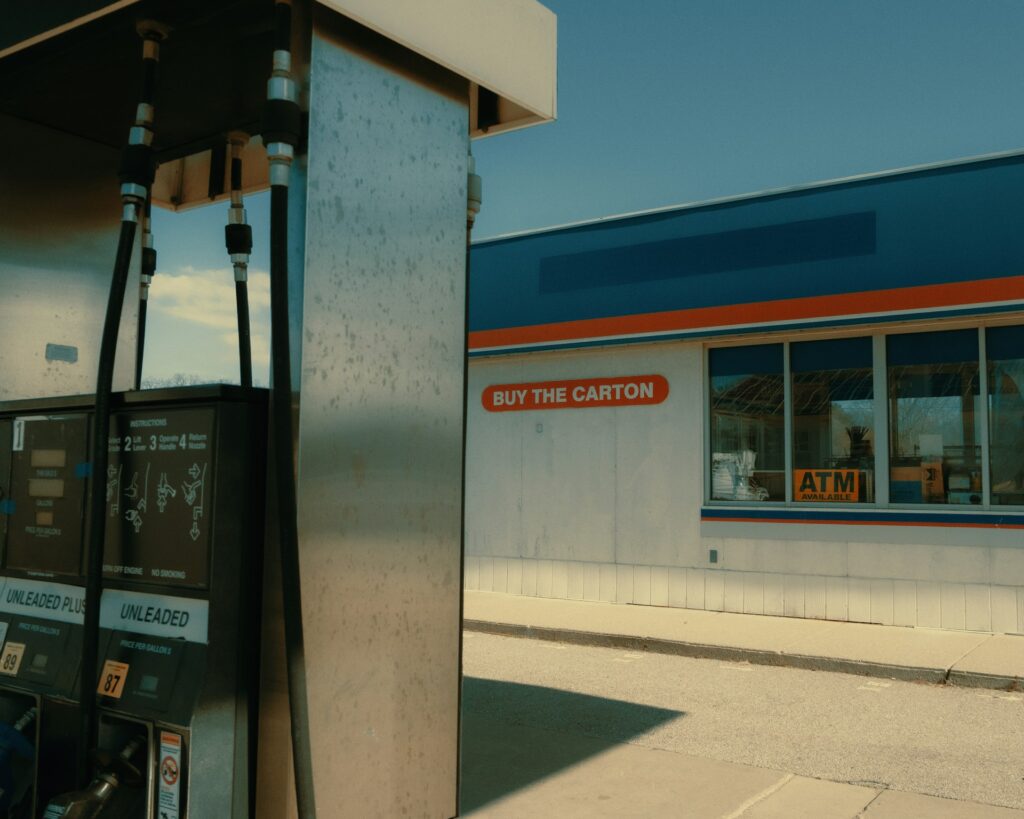
A gas station is one of the few businesses where the bank underwrites the dirt as hard as it underwrites the operator. You are buying real estate, fuel equipment, a convenience store, and underground tanks that may have leaked twenty years before you showed up. That is why an SBA loan for a gas station is usually the best financing available, and also why these deals fall apart more often than any other SBA purchase I work on.
This guide covers how SBA 7(a) and 504 loans work for gas stations and convenience stores, how much equity you need, what the environmental review looks like, and where buyers lose deals they should have closed.
Why Use an SBA Loan for a Gas Station?
Gas stations are special-purpose property. The building, canopy, and tanks only work for one use, so conventional lenders protect themselves with low leverage. In my experience, a conventional bank loan on a station runs 60% to 70% loan-to-value, if the bank will look at it at all.
An SBA loan for a gas station closes that gap, typically getting you to 80% to 90% financing with a longer amortization. The government guaranty is what lets the bank lend against a property type it would otherwise avoid. For buyers purchasing an operating station with fuel sales, a store, and maybe a car wash or quick-service food, that difference in down payment is often the whole deal.
SBA financing only applies when you operate the business. If you want to buy a station and lease it to an operator, you are in investment-property territory, and that is a net-lease or conventional commercial loan instead.
SBA 7(a) vs. 504 for a Gas Station: Which Fits?
Both programs work for fuel and convenience store properties. The right one depends on how much of the purchase price is real estate versus business value.
| SBA 7(a) | SBA 504 | |
|---|---|---|
| Max SBA amount | $5 million total loan | $5 million CDC debenture (bank first lien on top) |
| Typical equity on a gas station | 10% to 20% | 15% (20% for a business two years old or less) |
| Real estate term | Up to 25 years | 20 or 25 years on the CDC portion |
| Finances goodwill and inventory? | Yes | No, fixed assets only |
| Rate | Variable or fixed, capped over prime | Bank portion negotiated; CDC portion fixed |
| Best fit | Going-concern purchase with business value | Real estate heavy deal or ground-up build |
The 7(a) program tops out at $5 million per the SBA and covers real estate, equipment, change of ownership, and working capital in one loan. That flexibility matters for stations, because most purchase prices include a meaningful slice of goodwill tied to fuel volume and in-store sales.
The 504 program finances only fixed assets, but it brings a fixed rate on the CDC piece and lower equity on real estate heavy deals. I walk through the trade-offs in more detail in our post on SBA 504 vs. 7(a).
How Much Down Payment Does a Gas Station SBA Loan Require?
Plan on 15% to 20% of the total project cost. Here is where those numbers come from.
Under the 504 rules in 13 CFR 120.910, the borrower must contribute at least 15% when the project involves a limited or single-purpose building, and at least 20% when it is single-purpose and the business has operated for two years or less. A gas station is single-purpose, so 10% down on a 504 is off the table.
The 7(a) program does not have the same fixed percentages, but lenders apply similar logic. Most lenders we work with want:
- 10% to 15% equity on an acquisition of an established station with clean tax returns and a buyer who has run fuel or retail before.
- 20% or more for a first-time operator, a startup, or a station with declining fuel gallons.
- Seller financing on standby can count toward part of the equity on some deals, but expect the lender to require it to sit quiet for a set period.
- Working capital reserves on top of the down payment, because fuel inventory and credit card float eat cash fast.
What Does the Environmental Review Look Like for a Gas Station SBA Loan?
This is the section that decides most gas station deals. SBA treats gasoline stations as an environmentally sensitive industry, so every loan secured by a station needs a Phase I Environmental Site Assessment at a minimum.
Where this trips people up is everything after the Phase I. If the report shows past releases, removed tanks without closure letters, or nearby contamination, the lender will order a Phase II with soil and groundwater sampling. On older stations, I assume a Phase II is coming and budget the time for it up front.
What lenders look for in the environmental package:
- Tank age and construction: double-walled fiberglass tanks with leak detection are what lenders want to see. Single-walled steel tanks are a red flag.
- Compliance records: state UST registration, recent tank and line tightness tests, and leak detection logs.
- Closed release cases: a past leak is survivable if the state has issued a no-further-action letter.
- Financial responsibility: under 40 CFR 280.93, owners of petroleum USTs at marketing facilities must carry $1 million of coverage per occurrence and at least $1 million in annual aggregate. Lenders will ask for proof of that coverage or eligibility under a state tank fund before closing.
Get your environmental consultant engaged the week your purchase agreement is signed. Our commercial real estate due diligence guide covers how to build that timeline into your contingency periods.
From a recent deal: I recently worked with a buyer acquiring a branded station and convenience store in suburban Georgia for about $2.6 million. The Phase I flagged two steel tanks pulled in the 1990s with no closure documentation, which added five weeks for a Phase II. The sampling came back clean, the state closure was documented, and we closed on a 7(a) loan with 15% down, but only because the buyer had negotiated a contingency long enough to absorb the delay.
Buying a gas station or convenience store? We structure SBA and conventional deals for fuel and c-store buyers nationally. Schedule a 15-minute call →
How Lenders Underwrite the Business Behind a Gas Station SBA Loan
The environmental review gets the property past credit. The business has to carry the debt. Lenders look at the station as three income streams: fuel, inside sales, and anything extra like a car wash, lottery commissions, or food service.
Fuel margins are thin and volatile, so most lenders I work with put more weight on inside sales. A station with strong store margins and modest fuel gallons usually underwrites better than the reverse. Expect the lender to want:
- Three years of business tax returns and year-to-date financials
- Monthly fuel gallon reports and fuel supply agreement terms
- Inside sales reports from the point-of-sale system, broken out by category
- A debt service coverage ratio of 1.25x or better on historical cash flow
- A buyer resume showing retail, fuel, or multi-unit management experience
On change-of-ownership deals, SBA lenders also require an independent business valuation and a going-concern appraisal that splits value among real estate, equipment, and the business. If the price is well above appraised value, the gap either comes out of your pocket or out of the seller’s price.
What Do Gas Station SBA Loans Cost in 2026?
Most 7(a) loans are variable and priced off the prime rate. The bank prime loan rate was 7.00% as of November 9, 2026, per Federal Reserve data on FRED. SBA caps the spread on 7(a) loans above $350,000 at prime plus 3.0%, which puts the ceiling around 10% right now, and strong files price inside that.
On the 504 side, the bank’s first lien is negotiated, and the CDC debenture rate is set monthly when the debentures sell. Our breakdown of SBA 504 loan rates explains how that monthly pricing works.
Budget for these costs on top of the rate:
- SBA guaranty fee, financed into the loan on most 7(a) deals
- Phase I and possible Phase II reports
- Going-concern appraisal and business valuation
- Fuel equipment inspection and any tank upgrades the lender requires at closing
Common Reasons Gas Station Deals Fall Apart
I usually see the same four problems kill these loans:
- Unreported cash sales. Lenders can only use income on the tax returns. A seller who says the store “really makes more” is not helping you.
- Environmental surprises late in the process. A Phase II ordered in week six of a 45-day contingency is a renegotiation, not a closing.
- Short fuel supply or franchise terms. If the brand agreement expires in two years, the lender will want to see it extended or the buyer’s plan if it is not.
- Thin buyer experience. A first-time owner without retail management history may need an experienced partner or manager to get approved.
The fix for most of these is timing, and it applies to every SBA loan for a gas station I’ve worked on. Start the environmental work, the valuation, and the lender conversation as soon as you have a signed letter of intent.
Frequently Asked Questions
Can I get an SBA loan to buy a gas station?
Yes. Both the SBA 7(a) and 504 programs finance gas station and convenience store purchases when you will operate the business. Expect 10% to 20% down and a full environmental review.
How much down payment do I need for a gas station SBA loan?
Most deals require 15% to 20% of the project cost. Under SBA 504 rules, single-purpose property requires at least 15%, and 20% if the business has operated two years or less.
Do I need a Phase I environmental report for a gas station SBA loan?
Yes. SBA treats gas stations as environmentally sensitive, so a Phase I is required, and a Phase II is common on older sites or where tank history is incomplete.
Can an SBA loan finance a new gas station build?
Yes, but lenders want more equity and stronger operator experience for ground-up stations than for acquisitions. The 504 program is often the better fit for construction because it finances fixed assets with a long fixed-rate term.
Ready to finance a gas station or convenience store?
We’re a commercial mortgage brokerage serving business owners, investors, and developers nationally, with active lender relationships across SBA 7(a), SBA 504, and conventional commercial programs. Send us your scenario and we’ll respond within one business day with realistic terms.
This article is for informational purposes only and does not constitute financial, legal, or tax advice. Loan terms, rates, and availability vary by borrower, property, and market conditions. Consult Willowbrook Capital for scenario-specific guidance.
