
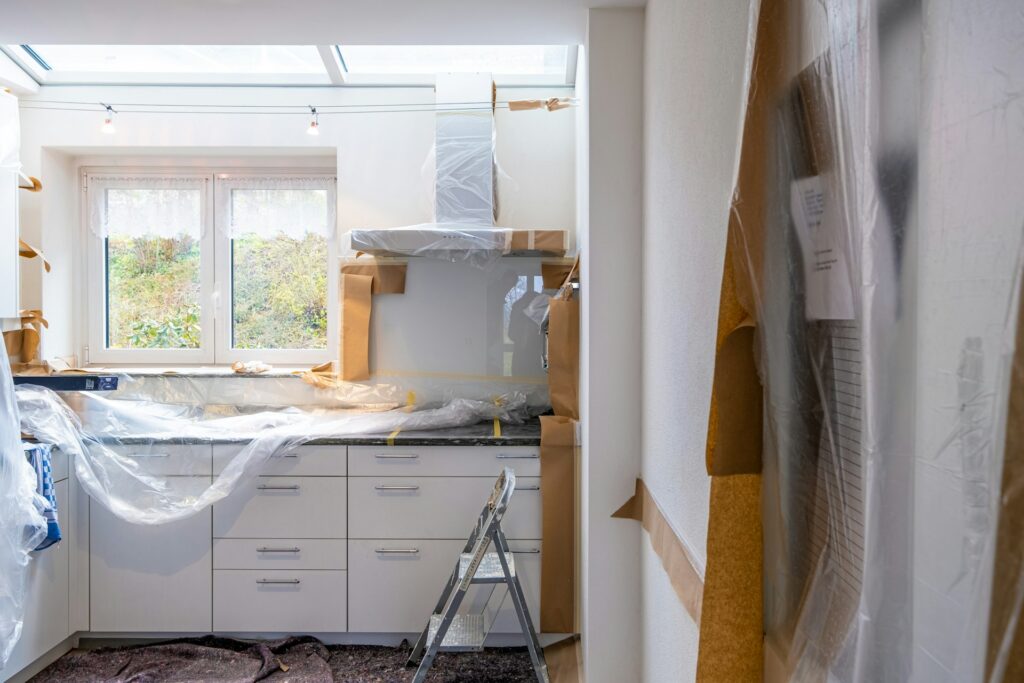
Two flippers can buy the same $200,000 house with the same $60,000 rehab budget and walk away with very different loan amounts. The difference usually isn’t credit or experience. It’s the after repair value, and how the lender’s appraiser arrives at it.
An after repair value loan is any rehab loan sized on what the property will be worth once the work is done, not just what you’re paying for it today. Here’s how lenders calculate ARV, the caps they apply to it, and where I see flippers get surprised at closing.
What you’ll learn:
- What ARV is and how an appraiser actually builds the number
- The three caps that decide your loan amount (and why the lowest one wins)
- A worked example with real numbers
- How to protect your ARV before you sign a purchase contract
What Is After Repair Value (ARV)?
After repair value is the estimated market value of a property once a defined scope of renovation is complete. It’s an opinion of value on a house that doesn’t exist yet, based on recent sales of similar homes that already look the way yours will.
That’s different from two other values a lender will look at on the same file:
- As-is value: what the property is worth today, in its current condition
- Purchase price: what you’re paying, which may be above or below as-is value
- After repair value: what it should be worth after your rehab budget is spent
Most fix-and-flip and rehab bridge lenders look at all three. ARV sets the ceiling on the total loan. Purchase price and as-is value set the ceiling on the initial advance at closing.
How Do Lenders Calculate ARV?
The lender orders an appraisal (or, on smaller loans, a broker price opinion or desktop valuation) with two values: as-is and “subject to” completion of your scope of work. The appraiser gets your rehab budget and plans, then pulls comparable sales.
Here’s what makes a comp count for ARV in my experience:
- Recent: closed in the last 3-6 months, 12 at the outside in thin markets
- Close: within about half a mile in a subdivision, a mile or more in rural areas
- Similar: within roughly 20% of your square footage, same bed/bath count, similar lot and age
- Renovated: finished to the same level you’re planning, not a dated listing that sold cheap
The appraiser adjusts each comp for differences (an extra bathroom, a garage, a pool) and reconciles to a single number. The appraiser is not grading your design taste. They’re matching your finished house to what buyers have already paid for. Granite and a spa shower in a neighborhood where renovated homes sell with laminate won’t move the ARV much.
Once the work is done, the lender confirms completion before releasing final funds. On agency loans, Fannie Mae’s Selling Guide B4-1.2-05 (published November 4, 2026) uses Form 1004D, the Appraisal Update and/or Completion Report, to confirm that the conditions in a “subject to” appraisal have been met. Private rehab lenders use their own inspectors and draw reports, but the logic is the same: the ARV is only as good as the finished work.
How Much Will an After Repair Value Loan Cover?
Rehab lenders apply three caps, and your loan is the lowest of the three. These are the ranges I see on clean files right now:
| Cap | Typical Range | What It Limits |
|---|---|---|
| Loan-to-cost (LTC) | 85-90% of purchase + rehab | Total loan vs. your all-in cost |
| Loan-to-ARV | 65-75% of ARV | Total loan vs. finished value |
| Initial advance | 80-90% of purchase price | Cash at closing; rehab comes later through draws |
First-time flippers usually land at the low end: around 80-85% LTC and 65-70% of ARV. Investors with five or more completed flips in the last two to three years can push toward 90% LTC and 75% of ARV. Rehab funds are held back and released in draws as work is inspected, so you’ll front some costs between draws.
Pricing sits well above long-term money. For reference, Freddie Mac’s Primary Mortgage Market Survey put the 30-year fixed at 7.11% for the week of November 12, 2026. Short-term rehab debt runs roughly 10-12% interest-only plus 1-2 points, depending on experience and leverage. Our post on fix and flip hard money rates breaks down what moves that range.
A Worked Example: Which Cap Wins?
Say you’re buying a three-bedroom for $200,000 with a $60,000 rehab. All-in cost is $260,000. The appraiser comes back with a $340,000 ARV.
- 90% LTC: $260,000 × 0.90 = $234,000
- 70% of ARV: $340,000 × 0.70 = $238,000
- Initial advance at 90% of purchase: $180,000 at closing, plus $54,000 of the rehab in draws
LTC is the binding cap here, so the total loan is $234,000. You bring $20,000 plus closing costs to the table and cover 10% of the rehab yourself.
Now drop the ARV to $310,000. Seventy percent of that is $217,000, which is lower than the LTC number. A $30,000 miss on ARV just cost you $17,000 of loan proceeds, and that gap comes out of your pocket at closing or out of your rehab budget.
From a recent deal: I recently placed a rehab loan for an investor flipping a 1960s ranch outside Jacksonville. His own ARV was $395,000, built off two staged listings that hadn’t closed yet. The appraisal came in at $352,000 using closed sales only, which pulled his loan from about $276,000 to $246,000. We restructured with a lender in our network that lends to 75% of ARV for repeat flippers, closed the gap to about $12,000, and he still hit his margin when the house sold for $361,000.
Looking at a flip where the ARV feels tight? We structure rehab and fix-and-flip loans nationally. Schedule a 15-minute call →
Why ARV Comes In Low (and How to Protect It)
Low ARVs are the most common reason flip loans shrink between term sheet and closing. The usual causes:
- Using active listings instead of closed sales. Appraisers weight closed comps. Asking prices don’t count.
- Over-improving for the street. The ARV tops out near the best renovated sale on comparable streets.
- A vague scope of work. “Update kitchen” gets valued conservatively. A line-item budget with finishes listed gives the appraiser something to match.
- Square footage that won’t count. Unpermitted additions and finished basements often get little or no credit.
Before you sign a contract, pull three to five closed, renovated sales within the last six months and build your own ARV off the median, not the best one. Then run your deal at 65-70% of that number. If the deal still works, the lender’s appraisal is unlikely to kill it. If you need the full checklist lenders review on a flip, start with our fix and flip loan requirements guide.
ARV and Your Exit
ARV doesn’t just size the rehab loan. It sets your exit. If you sell, ARV is your gross sale estimate. If you keep the property, the new appraisal after completion drives how much you can pull out on a refinance.
That second path is where a lot of investors get caught. DSCR lenders size the refinance on the lower of the appraised value and what the rent will support, so a strong ARV doesn’t help if the rent can’t carry the new payment. Our guide to fix-to-rent loans walks through that refinance math.
Frequently Asked Questions
What is a good loan-to-ARV ratio for a fix and flip?
Most rehab lenders cap the total loan at 65% to 75% of ARV. Experienced flippers with a track record get the higher end, while first-time investors usually see 65% to 70%.
Does an after repair value loan cover 100% of rehab costs?
Some programs fund up to 100% of the rehab through draws, but only if the total loan still fits under the loan-to-cost and loan-to-ARV caps. In practice, most borrowers cover 10% to 15% of total project cost.
Who determines ARV for a hard money loan?
The lender orders the valuation, usually a full appraisal with an as-is and a subject-to-completion value. Your own ARV estimate helps frame the request, but the lender’s valuation is what sizes the loan.
What is the 70% rule in house flipping?
The 70% rule says you shouldn’t pay more than 70% of ARV minus repair costs. It’s an investor screening rule, not a lender requirement, but it lines up closely with how lenders cap loans on ARV.
Ready to finance your next flip?
We’re a commercial mortgage brokerage serving investors and developers nationally, with active lender relationships across fix-and-flip, rehab bridge, and DSCR programs. Send us your scenario and we’ll respond within one business day with realistic terms.
This article is for informational purposes only and does not constitute financial, legal, or tax advice. Loan terms, rates, and availability vary by borrower, property, and market conditions. Consult Willowbrook Capital for scenario-specific guidance.
