
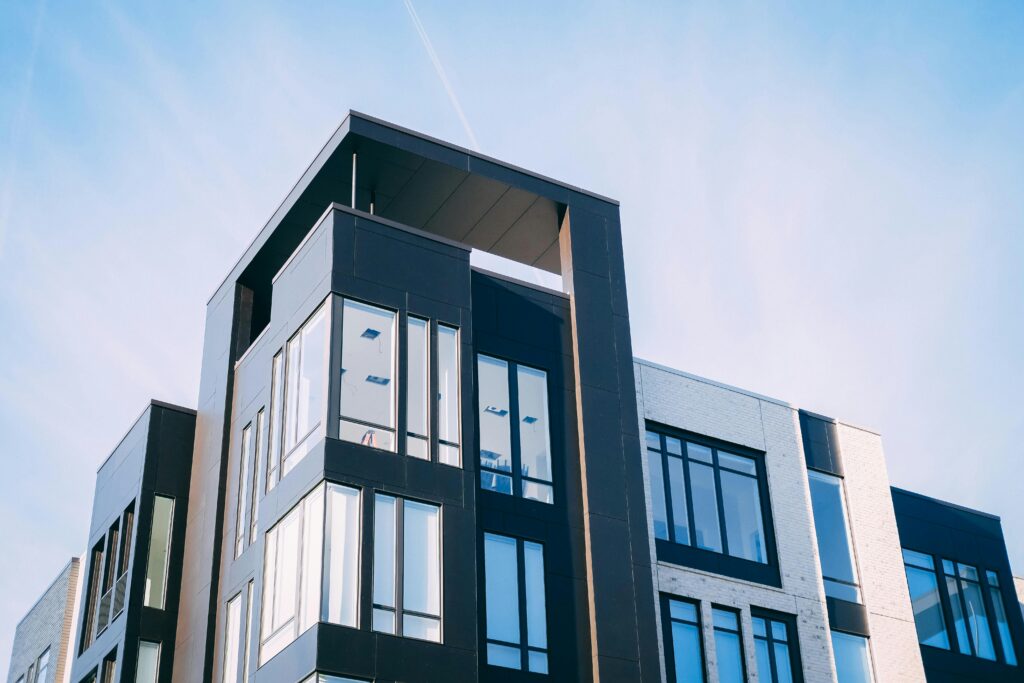
A developer I work with closed a 22-unit apartment project in Nashville last fall — solid build, well-located, but barely 40% occupied at certificate of occupancy. His construction lender was keeping the loan current, but made it clear they weren’t extending past maturity. He needed 18 months of runway to lease up and qualify for permanent financing. That gap between “construction complete” and “ready for a perm loan” is exactly what a mini-perm is designed to fill.
If you’re finishing a development project or approaching your construction loan maturity, here’s what you need to know.
In this guide:
- What a mini-perm loan is and where it fits in the development financing lifecycle
- How mini-perms differ from bridge loans and construction-to-permanent loans
- Typical terms, rates, LTV, and qualifying requirements in 2026
- When a mini-perm makes sense — and when to look elsewhere
What Is a Mini-Perm Loan?
A mini-perm loan is short-term commercial financing used to pay off a construction loan once a project is complete. It’s not a permanent loan — it’s a stabilization loan. It gives a newly built property time to lease up, generate operating history, and reach the occupancy and DSCR thresholds that permanent lenders require before they’ll commit to long-term financing.
Mini-perms typically carry terms of 3–7 years and amortize over 20–25 years. Unlike most permanent commercial loans, mini-perms are usually recourse — meaning the lender can come after the sponsor personally, not just the property, if the deal goes sideways. That recourse element reflects the fact that a newly completed, not-yet-stabilized property carries more risk than a seasoned income-producing asset.
Where Mini-Perms Fit in the Development Lifecycle
Understanding mini-perms is easier when you see where they fall in a typical development deal:
- Land acquisition loan — finances the purchase of raw land before entitlements or permits
- Construction loan — interest-only, funds the vertical build in monthly draws against a schedule of values
- Mini-perm loan — takes out the construction loan at completion; property is still in lease-up
- Permanent loan — long-term financing (10–30 years) once the property reaches stabilized occupancy
Not every development needs all four stages. Some projects go straight from construction to a permanent loan if they’re pre-leased to a creditworthy tenant at completion — a build-to-suit industrial facility or a net-lease retail pad, for example. For those deals, a construction-to-permanent loan handles the whole transition in one closing.
For most speculative multifamily, mixed-use, or retail projects, though, there’s a real gap between when construction wraps and when the property meets permanent loan thresholds. Typical multifamily lease-up timelines run 12–18 months; mixed-use and retail can run longer. That gap is the mini-perm’s job.
Per the Mortgage Bankers Association’s 2026 commercial lending forecast, total commercial mortgage originations are projected to reach $805 billion in 2026 — a 27% increase over 2025 — driven in part by a wave of construction completions entering the refinance and lease-up cycle. Mini-perms are one of the primary vehicles handling that transition.
Mini-Perm vs. Bridge Loan: What’s the Difference?
Mini-perms and bridge loans get used interchangeably, but they’re not the same. Here’s how they compare:
| Mini-Perm | Bridge Loan | |
|---|---|---|
| Primary use | Pay off construction loan at completion | Acquisition or value-add repositioning |
| Typical term | 3–7 years | 12–36 months |
| Amortization | 20–25 years | Interest-only, usually |
| Recourse? | Usually yes | Usually yes |
| Lender type | Community banks, regional banks | Debt funds, bridge lenders |
| Cost vs. permanent | Higher, but lower than most bridge | Highest of the three |
The key difference is time horizon and purpose. A mini-perm holds a newly completed property through lease-up. A bridge loan is generally shorter, more expensive, and structured to fund a repositioning play or a quick acquisition while longer-term financing is arranged.
Mini-perms also usually include amortization, unlike the interest-only structure typical of bridge loans. That amortization keeps the outstanding balance trending down through the hold period — which lenders view favorably heading into the permanent refinance.
Mini-Perm Loan Terms and Structure
Here’s what to expect from a typical mini-perm in 2026:
Term: 3–7 years. Five years is the most common for multifamily and mixed-use projects.
Amortization: 20–25 years. Some mini-perms include a 6–18 month interest-only period at the start to ease cash flow pressure during early lease-up.
Rates: Mini-perms typically price at a spread over the prime rate or SOFR. Expect something in the 7.0–9.0% range in mid-2026, depending on lender, property type, LTV, and credit profile. That’s meaningfully higher than a stabilized agency loan (Freddie or Fannie multifamily runs sub-6.5% for clean deals), but lower than what most short-term bridge lenders charge.
LTV: Most mini-perm lenders lend at 65–75% LTV, based on an appraised value assuming full stabilization. If the property isn’t close to that stabilized value yet, the lender may size the loan off current occupancy-based value — which could require more equity at closing.
Recourse: Plan for a full personal guarantee. Most mini-perm lenders require it. This is a key structural difference from permanent loans, which can often be non-recourse once a property stabilizes and qualifies for agency or CMBS financing.
Covenants: Expect annual reporting requirements — personal financial statements, tax returns, rent roll, and operating statements. The lender wants to monitor performance through the lease-up period and have a clear picture of the path to permanent financing.
Who Offers Mini-Perm Loans?
Community banks and regional banks are the traditional mini-perm providers. They often provide the construction loan too, and the mini-perm is essentially a rollover into the same institution — just with a longer term now that construction risk is off the table.
The advantage of staying with your construction lender is relationship. They already know the deal, the sponsor, and the market. The disadvantage is that community banks can be conservative on rate and structure, especially when local lending conditions have tightened.
For larger transactions or markets where local banks have pulled back, debt funds and private lenders also offer mini-perm structures. These tend to be more flexible on lease-up metrics and minimum occupancy requirements at closing, but carry higher pricing.
For multifamily projects at scale, it’s also worth noting that HUD/FHA’s 221(d)(4) program combines construction and permanent financing in one closing. The process is longer, but the rate and leverage are hard to beat for the right deal — and it eliminates the mini-perm step entirely.
From a recent deal: I recently placed a mini-perm for a developer in Raleigh who had just completed a 28-unit apartment project. His construction lender — a regional bank — rolled him into a 5-year mini-perm at prime plus 1.5%, 25-year amortization, with a 12-month interest-only period at the start. The property was 40% occupied at completion; the bank agreed to lend at 70% of the as-stabilized appraised value, which gave the sponsor enough room to manage cash flow during lease-up without burning through reserves. Fourteen months later, the building was at 91% occupancy and they refinanced into agency debt at a sub-6% rate. That’s the mini-perm working exactly as designed.
Approaching a construction loan maturity? We work with lenders that offer mini-perm and bridge structures for newly completed projects at all occupancy levels. Schedule a 15-minute call →
What You Need to Qualify for a Mini-Perm Loan
Certificate of occupancy. The building needs to be substantially complete. Most mini-perm lenders won’t close while active construction risk remains.
Sponsor track record. Lenders want to see experience developing and operating similar properties. First-time developers will face more scrutiny and may need to bring in an experienced co-sponsor or GP.
Minimum occupancy. Some lenders require 50–75% occupancy to close; others will close at lower occupancy with strong reserves and a credible lease-up plan. The specific threshold depends on the lender’s credit appetite and the market.
LTV headroom. Typically 65–75% of stabilized appraised value. If your current occupancy drives current value below the loan amount, expect a gap that equity must cover.
Personal guarantee. Full recourse is the norm. Plan for it.
Reserves. Most lenders want 6–12 months of debt service in reserve, particularly when occupancy is still building at close.
When a Mini-Perm Makes Sense — and When to Look Elsewhere
A mini-perm is the right tool when:
- Your construction loan is maturing and the property isn’t yet stabilized
- You need 2–5 years of runway before hitting permanent loan thresholds
- You have an existing bank relationship that already knows the deal and market
- You want amortizing debt rather than a pure interest-only balloon
It’s probably not the right tool when:
- The property is pre-leased and stabilized at completion — go straight to permanent
- You need non-recourse financing immediately and have the NOI to support it
- You’re doing large-scale multifamily where HUD’s construction-to-perm program beats the economics
For most speculative ground-up projects — especially multifamily and mixed-use — the mini-perm is the lowest-friction path between construction completion and permanent financing, assuming your bank relationship and deal metrics support it. Our guide to ground-up construction loans for developers covers how the construction side is underwritten, which gives you a clearer picture of where mini-perm sizing typically lands.
Frequently Asked Questions
How long is a mini-perm loan?
Most mini-perm loans have terms of 3–7 years. Five years is the most common for multifamily and mixed-use projects, giving developers time to lease up, stabilize NOI, and refinance into permanent agency or conventional financing.
What’s the difference between a mini-perm and a construction loan?
A construction loan is interest-only and funds the actual build in monthly draws. A mini-perm pays off the construction loan at completion and gives the borrower time to lease up before qualifying for long-term permanent financing. Construction loans typically carry higher interest rate risk and more active lender oversight during the build period.
Are mini-perm loans recourse?
Usually yes. Most mini-perm lenders require a personal guarantee from the developer or principal sponsor. This is a key structural difference from permanent loans, which can often be structured non-recourse once the property stabilizes and qualifies for agency or CMBS financing.
Can you get a mini-perm on a multifamily property?
Yes — multifamily is one of the most common use cases. Mini-perms are frequently used to bridge from construction completion to agency refinancing (Freddie Mac, Fannie Mae, or HUD). Typical multifamily lease-up timelines run 12–18 months, which fits comfortably within a standard 3–5 year mini-perm term.
Ready to Finance Your Development or Refinance Your Construction Loan?
We work with a national network of community banks, regional banks, and debt funds offering mini-perm and bridge structures for commercial and multifamily projects at all stages of development. If your construction loan is approaching maturity or you’re planning your construction exit strategy, send us the deal — we’ll come back with realistic structure options within one business day.
This article is for informational purposes only and does not constitute financial, legal, or tax advice. Loan terms, rates, and availability vary by borrower, property, and market conditions. Consult Willowbrook Capital for scenario-specific guidance.
