
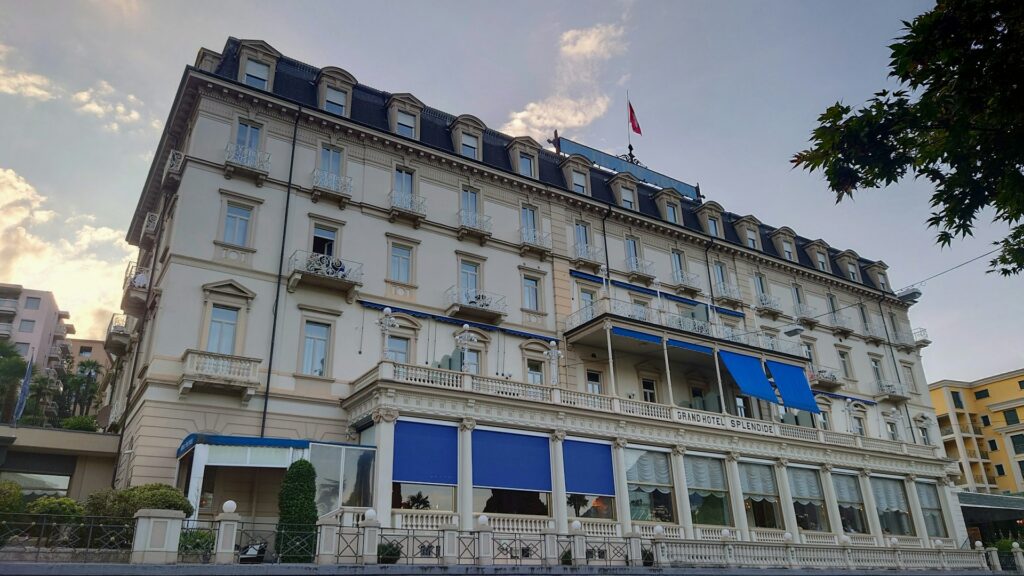
A hotel operator with two limited-service properties finds a third: an 80-room flagged hotel off the interstate, priced at $6.5 million, with a franchise-mandated renovation due inside two years. A conventional bank wants 30% to 35% down on hospitality. An SBA loan for a hotel can cut that to 15%, and in some 7(a) structures closer to 10%.
That gap is why so many owner-operated hotel and motel purchases run through SBA programs. This guide covers how an SBA hotel loan works under the 504 and 7(a) programs, what the down payment really is, what lenders underwrite, and where hotel deals tend to stall.
Can You Get an SBA Loan for a Hotel?
Yes. Hotels and motels qualify for SBA financing because the SBA treats a hotel as an operating business, not passive real estate. You’re selling short-term stays and running the property day to day, which is different from collecting rent from tenants. SBA’s own eligibility rules require the borrower to be an operating, for-profit business, and they exclude passive and speculative activities (SBA 504 program overview).
In practice that means:
- Guests should be transient. A hotel that has drifted into extended-stay apartments with monthly tenants starts to look like passive rental income. Lenders will ask about average length of stay.
- You operate it. The ownership group runs the business, even if it hires a management company. Handing the hotel to a third party under a lease doesn’t fit the program.
- The usual SBA structure applies. Most buyers hold the real estate in one entity and run the hotel in an operating company. Under 13 CFR 120.111, the operating company has to guarantee or co-borrow, and every 20%+ owner personally guarantees.
Size isn’t usually the problem. Most independent and franchised select-service hotels fall well under SBA size standards, and the 504 program also has an alternative tangible net worth and net income test.
SBA 504 vs. 7(a) for Hotels
Both programs finance hotel acquisitions, refinances, renovations, and ground-up construction. They’re built differently, and the choice usually comes down to project size, how much of the deal is real estate, and whether you need working capital or a PIP folded in. I cover the general differences in my SBA 504 vs. 7(a) comparison. For an SBA loan for a hotel specifically:
| SBA 504 | SBA 7(a) | |
|---|---|---|
| Structure | Bank first lien (~50%) + CDC second lien (~35%) + borrower equity | One bank loan with an SBA guaranty |
| Hotel down payment | 15% minimum; 20% if the business is 2 years old or less | Usually 10% to 20%, set by the lender |
| SBA portion cap | $5M CDC debenture ($5.5M for energy public-policy projects) | $5M loan |
| Rate | CDC piece fixed; bank piece fixed or floating | Usually floating off prime, capped by SBA |
| Term | Up to 25 years on the CDC piece | Up to 25 years for real estate |
| Uses beyond real estate | Long-term fixed assets: building, FF&E, renovation | Also franchise fees, working capital, some goodwill |
| Best fit | Larger hotels, $4M+ projects, rate certainty | Smaller hotels, deals with business value and PIP costs |
The two can be combined on the same project. Since July 2026, SBA allows combined 7(a) and 504 exposure of up to $10 million per borrower, which helps on larger flagged hotels.
How Much Down Payment Does an SBA Hotel Loan Require?
On a 504 hotel loan, plan on 15% down, not 10%. The regulation sets the borrower contribution at 10% in general, but raises it to at least 15% for a limited or single-purpose building, and hotels are treated as special-purpose property. If the operating business has run for two years or less, that’s another 5%, for a total of 20% (13 CFR 120.910).
That gives you three common 504 hotel structures:
- Existing hotel, experienced operator: 50% bank / 35% CDC / 15% borrower
- Ground-up hotel by a new operating company: 50% bank / 30% CDC / 20% borrower
- Hotel purchase with a big PIP: same splits, but the renovation budget is part of project cost, so your 15% applies to the total
Congress has debated removing the extra 5% for special-purpose properties through the Main Street Parity Act (H.R. 5763). Until a change is enacted and SBA implements it, I’d underwrite every 504 hotel deal at 15% minimum.
On the 7(a) side, the lender sets the equity injection within SBA’s rules. For hotel acquisitions and change-of-ownership deals I usually see 10% to 20%. Seller financing on standby can sometimes cover part of it. Where this trips people up is closing costs and the PIP: lenders size your down payment on total project cost, not the purchase price, so a $6.5 million hotel with a $900,000 PIP is a $7.4 million project.
What Do Lenders Underwrite on a Hotel?
Hotels are operating businesses with daily-priced revenue, so lenders underwrite them more like a business acquisition than an apartment building. Expect a hard look at five things.
1. Trailing cash flow
Lenders want trailing 12-month and 3-year P&Ls, STR reports if the hotel subscribes, and tax returns. Most SBA lenders I work with want a debt service coverage ratio of at least 1.25x on trailing NOI after a 4% FF&E reserve and a market management fee, whether or not you plan to self-manage.
2. Your hotel experience
This is the big one. First-time hotel owners can get SBA financing, but lenders want to see hospitality management experience somewhere in the group or a professional management company in place. An operator who already runs a flagged hotel gets much better terms.
3. The flag and the franchise agreement
For a branded hotel, the lender needs the franchisor’s approval of the transfer, a comfort letter, and the remaining term on the franchise agreement. A license that expires a few years into a 25-year loan is a problem.
4. The PIP
Most flag transfers trigger a property improvement plan. Lenders want the PIP from the brand, a contractor bid, and a realistic schedule. Good news: PIP costs can be financed inside the SBA loan.
5. Appraisal and feasibility
Hotel appraisals split value into real estate, FF&E, and business value. On ground-up hotels and startups, lenders almost always require a third-party feasibility study, and on construction that study can take several weeks.
From a recent deal: I recently worked with an operator who owned two limited-service hotels in Tennessee and was buying a third, an older flagged property needing about $1.1 million in brand-mandated renovations. We ran it as a 504 with 15% down on total project cost, so the PIP was financed with the purchase instead of coming out of his pocket after closing. The hard part wasn’t credit. It was getting the franchisor’s transfer approval and PIP finalized early enough that the bank and CDC could underwrite real numbers.
Looking at a hotel or motel purchase? We structure SBA 504 and 7(a) hotel loans nationally. Schedule a 15-minute call →
SBA Hotel Loan Rates and Market Conditions in 2026
SBA 7(a) loans usually float off the prime rate. The bank prime rate was 7.00% as of November 9, 2026, according to Federal Reserve H.15 data on FRED. SBA caps the spread lenders can charge, and on larger hotel loans that cap is prime plus 3.00%, so most 7(a) hotel loans right now land somewhere between the mid-8s and 10%.
On the 504, the CDC piece is fixed for the full term and priced off Treasury yields at the monthly debenture sale. I break down how those rates are set in my post on SBA 504 loan rates. With the 10-year Treasury above 5% in mid-November, locking a fixed long-term rate on half the deal has real value.
The operating backdrop is better than many buyers expect. CoStar and Tourism Economics raised their 2026 U.S. RevPAR growth forecast to 4.4%, with ADR up 3.1% and new supply growing only 0.4% (CoStar Q3 2026 forecast assumptions). Low new supply is good for existing hotels, but lenders still underwrite your property’s trailing numbers, not national averages.
Where SBA Hotel Deals Stall
Most SBA hotel loans that fall apart don’t die on credit. In my experience it’s one of these:
- Seller books don’t match tax returns. Lenders underwrite what was reported to the IRS. Cash revenue the seller “didn’t report” doesn’t count.
- Late PIP. If the brand hasn’t issued the PIP, the lender can’t size the project.
- Environmental issues. Older motels with on-site laundry or nearby gas stations sometimes need a Phase II.
- Too much business value. If the price is well above what the real estate and FF&E appraise for, the gap has to be covered by equity, seller financing, or a 7(a) that can finance goodwill.
If you’re weighing SBA against a conventional or bridge loan, my guide to hotel financing covers the non-SBA options.
Frequently Asked Questions
What is the minimum down payment for an SBA hotel loan?
On an SBA 504 hotel loan, the minimum is 15% because hotels are special-purpose property, or 20% if the operating business is two years old or less. On a 7(a), lenders typically require 10% to 20% depending on experience and deal structure.
Can a first-time hotel owner get an SBA hotel loan?
Yes, but expect more scrutiny and possibly more equity. Lenders want hospitality management experience in the ownership group or a professional management company, and a franchise flag helps a lot.
Can I use an SBA loan to build a new hotel?
Yes. Both 504 and 7(a) finance ground-up hotel construction. Expect a feasibility study, franchise approval, a fixed-price construction contract, and 20% down if the operating company is new.
Does an SBA loan cover a hotel PIP?
Yes. Renovation costs required by the franchisor can be included in project cost and financed with the purchase, as long as the PIP and contractor bids are in hand before underwriting.
Ready to Finance Your Hotel?
We’re a commercial mortgage brokerage serving investors, developers, and business owners nationally, with active lender relationships across SBA 504, SBA 7(a), bank, and hospitality bridge programs. Send us your scenario, and we’ll respond within one business day with realistic terms.
This article is for informational purposes only and does not constitute financial, legal, or tax advice. Loan terms, rates, and availability vary by borrower, property, and market conditions. Consult Willowbrook Capital for scenario-specific guidance.
