
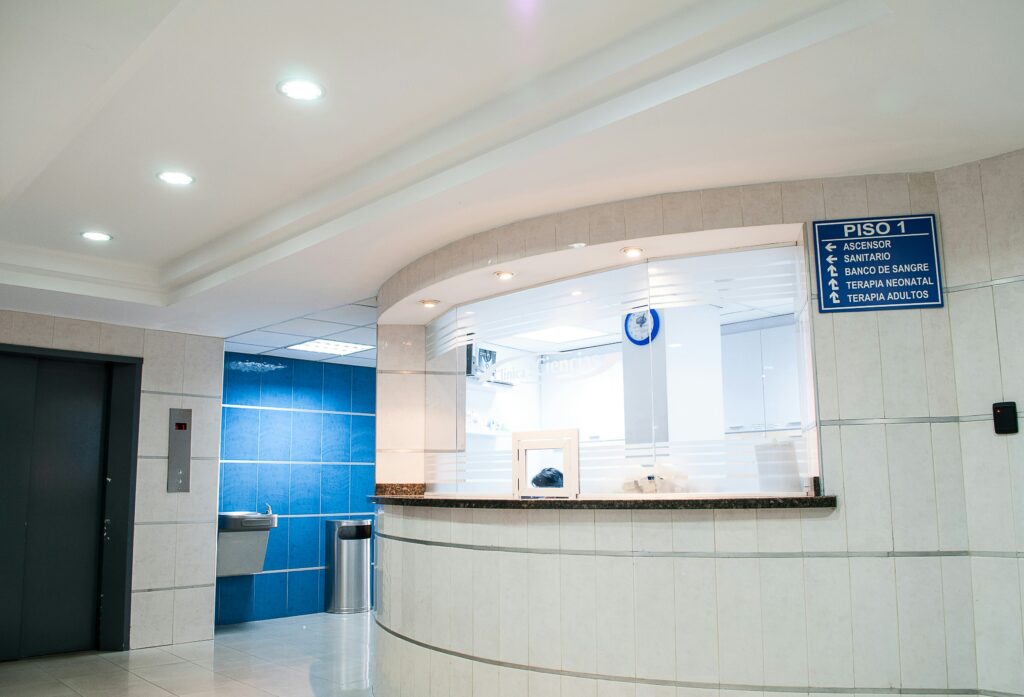
Most healthcare operators spend their entire career writing rent checks for someone else’s building. For a physician practice, dental group, or specialty clinic that’s been in the same location for three to five years, buying the property you practice in is almost always the better financial move — and in most cases, an SBA loan makes it achievable with as little as 10% down.
This guide breaks down exactly how SBA financing works for medical office buildings, which program fits which situation, and what the process actually looks like from application to close.
- How SBA 504 and SBA 7(a) loans work for medical office buildings
- Which program fits your situation (and when conventional financing makes more sense)
- Current rates, terms, and what lenders actually look at
- Occupancy requirements and eligibility rules
- What the process looks like from application to close
Why Medical Office Buildings Are a Strong SBA Lending Target
Medical office is one of the strongest-performing property types in commercial real estate right now. According to CBRE’s 2026 Healthcare Real Estate Outlook, national medical office occupancy sits near 93% — the highest in a decade — while conventional office hovers around 85%. Lease terms run 7 to 15 years on medical tenants versus 3 to 7 for standard office. Tenant retention in healthcare spaces runs above 80% nationally.
SBA lenders know this. Medical and dental practices are among the most creditworthy SBA borrowers: predictable revenue, long-term tenants (even if the tenant is the borrowing practice itself), and a building that tends to hold value because of specialized tenant improvements.
The result: SBA approval rates for medical office borrowers tend to run higher than the general small business population. When a lender sees a 10-year-old physician practice buying the building it’s already operating from, that’s about as clean a credit story as SBA real estate lending gets.
The Two Programs: SBA 504 vs. SBA 7(a)
Both programs work for medical office building purchases. They’re not interchangeable — each has a distinct use case.
SBA 504: The right tool for most medical office purchases. The 504 is specifically designed for fixed-asset acquisition — commercial real estate and large equipment. It offers the lowest available rates and the longest terms of any SBA real estate program. If your primary goal is buying the building, 504 is almost always the lower-cost path.
SBA 7(a): More flexible. You can use 7(a) for real estate, but also for leasehold improvements, practice equipment, and working capital in the same loan. For practices that need to fund a buildout alongside the acquisition, 7(a) can cover all of it in one structure. The tradeoff is a higher rate and shorter effective term on the real estate portion.
SBA 504 Structure — How the Financing Layers Work
The 504 is a three-party structure. For a $2M medical office building purchase, the layers typically look like this:
| Component | Who Provides It | Coverage | Typical Rate (Aug 2026) |
|---|---|---|---|
| First mortgage | Conventional bank | ~50% (~$1M) | 7–9% fixed or variable |
| Second mortgage (CDC) | Certified Development Company | ~40% (~$800K) | 6.19–6.27% fixed |
| Borrower equity | You | ~10% (~$200K) | N/A |
The CDC portion is funded through SBA-backed debentures sold at regular auctions. Per the SBA’s 504 loan program, the August 2026 debenture rate came in at 6.19–6.27% depending on term (10, 20, or 25 years) — and that rate is fixed for the full life of the loan.
That’s the key distinction: you’re locking a long-term fixed rate on 40% of your purchase at a price that beats what you’d get on the conventional first. For a healthcare operator planning to occupy the building for 15 or 20 years, that rate stability has real value.
SBA 7(a) for Medical Office — When It Makes More Sense
The 7(a) is a single-lender product — one bank originates and services the whole loan, with the SBA guaranteeing a portion of the balance. For real estate purchases, current variable-rate ceilings run 9.75–13.25% APR using a 6.75% base rate, with qualified borrowers typically landing in the 10–13% APR range. That’s higher than a blended 504 structure.
Three scenarios where 7(a) makes more sense for medical office financing:
- Speed: A 7(a) through an SBA Preferred Lender can sometimes move faster than a 504, which requires CDC coordination. If you’re in a competitive acquisition, that matters.
- Smaller loan sizes: For purchases under $500K, the 504’s overhead and layered structure isn’t always worth it. A 7(a) is simpler at smaller balances.
- Mixed-use projects: If you’re buying a building and funding a major renovation or equipment purchase simultaneously, 7(a) can bundle the whole project into one loan where a 504 can’t.
What You Need to Qualify
Occupancy is the first question. The SBA requires that the borrowing entity occupy at least 51% of the building for an existing property (60% for new construction, reaching 80% within 10 years). For a practice buying its own building, this is almost always satisfied — the key is documenting it clearly with a lease or occupancy plan.
Beyond occupancy, lenders look at:
- Practice financials: Two to three years of business tax returns and year-to-date P&L. Revenue consistency matters more than revenue size at the underwriting table.
- Personal credit: Most SBA lenders want a minimum 680 FICO. I’ve seen deals get done in the high 600s when practice cash flow is strong.
- Debt service coverage: The practice needs to cover the building’s debt service. Lenders typically want 1.25x minimum DSCR factoring the new mortgage into the practice’s full debt load.
- Business tenure: SBA prefers established practices with two or more years in operation. Newer practices can qualify but need stronger personal financial history to compensate.
- Citizenship: As of March 2026, all direct and indirect owners must be U.S. citizens or U.S. nationals with principal residence in the U.S.
From a recent deal: I recently worked with an internal medicine group in the Nashville area that had been leasing their building for six years. Their landlord was selling, and they had first right of refusal at $2.8M. We structured an SBA 504 — $1.4M conventional first, $1.12M CDC second, $280K from the practice. The fixed rate on the CDC portion locked at 6.22%. Their combined monthly payment came in below what they’d been paying in rent. The deal closed in 74 days from application.
Buying the building your practice occupies? We structure SBA 504 and 7(a) loans for healthcare operators nationally. Schedule a 15-minute call →
Timeline — What the Process Actually Looks Like
Both 504 and 7(a) transactions run 60 to 90 days from complete application to close. That’s the honest range — I’ve seen clean deals close in 55 days and complicated ones stretch to 110. Here’s what drives the variance:
- Doc completeness at the start: Practice returns, YTD P&L, personal returns, building appraisal, entity documents. Complete packages move faster. Trickle-in docs kill timelines.
- Third-party reports: Environmental Phase I (required on most commercial purchases), appraisal, and sometimes a property condition assessment add two to four weeks regardless of loan program.
- CDC coordination (504 only): The CDC review adds a step that doesn’t exist in 7(a). In most markets this adds one to two weeks; busier CDCs can add more.
We typically recommend giving yourself 90 days of runway from contract execution to close on SBA-financed acquisitions. Build that into your purchase agreement and don’t accept a 30-day close contingency on a medical office SBA deal.
SBA vs. Conventional Financing — The Comparison
If you have 25 to 35% down and a well-documented practice, conventional commercial financing is also available. Here’s how the programs compare:
| Feature | SBA 504 | SBA 7(a) | Conventional |
|---|---|---|---|
| Down payment | 10% | 10–20% | 25–35% |
| Rate (real estate) | 6–9% blended (CDC portion fixed) | 10–13% variable | 7–9% fixed or variable |
| Term | 20–25 years | 10–25 years | 5–10 year fixed, 25-yr amort |
| Use of proceeds | Real estate + large equipment | RE + equipment + working capital | Real estate |
| Prepayment penalty | Yes (10-year declining) | Yes (varies) | Varies by lender |
Conventional wins when a practice has substantial reserves, wants to avoid SBA fees (which run 2–3.5% of the guaranteed portion), and prefers prepayment flexibility. For practices preserving cash for buildout or equipment, the SBA path wins on down payment math alone.
We also place SBA financing for restaurant real estate and SBA loans for warehouse and industrial properties through similar owner-occupied structures. The credit box is consistent across property types — eligible use and occupancy requirements are what vary. If you’re looking at a building under $1.5M, it’s also worth understanding how small balance commercial real estate loans compare to SBA before you commit to a program.
Frequently Asked Questions
Can I use an SBA loan to build a new medical office building?
Yes. Both SBA 504 and 7(a) cover ground-up construction for owner-occupied medical facilities. For new construction, the occupancy requirement rises to 60% within the first year, reaching 80% within 10 years. Construction-to-perm SBA structures exist but add complexity — draw management and timeline risk matter more in construction deals than acquisitions.
What’s the maximum SBA 504 loan amount for a medical office building?
The CDC portion is capped at $5.5 million for most projects, with higher limits available for businesses meeting certain energy efficiency or public policy criteria. The conventional bank first has no SBA cap. In practice, most medical office 504 deals fall between $1M and $8M total project cost.
Can a healthcare operator buy a multi-tenant medical office building with an SBA loan?
Yes, as long as the borrowing entity occupies at least 51% of the gross leasable area. The remaining space can be leased to other tenants — including other medical practices or unrelated tenants. The occupancy test is based on square footage, not revenue or headcount.
Is a medical office building a good long-term investment even if I plan to sell my practice eventually?
Generally yes — the building has standalone value as a leased medical property even if the practice is sold separately. Medical office occupancy runs high nationally, healthcare tenants sign long leases, and purpose-built medical space commands a premium over standard office. That said, the SBA 504 carries a 10-year declining prepayment penalty — factor that into your exit math before closing.
Ready to finance your medical office building?
We work with healthcare operators nationally on SBA 504 and 7(a) transactions, as well as conventional commercial financing for practices that don’t fit the SBA credit box. Send us your scenario — we’ll respond with realistic terms within one business day.
Get a Quote → | Schedule a Call
This article is for informational purposes only and does not constitute financial, legal, or tax advice. Loan terms, rates, and availability vary by borrower, property, and market conditions. Consult Willowbrook Capital for scenario-specific guidance.
