
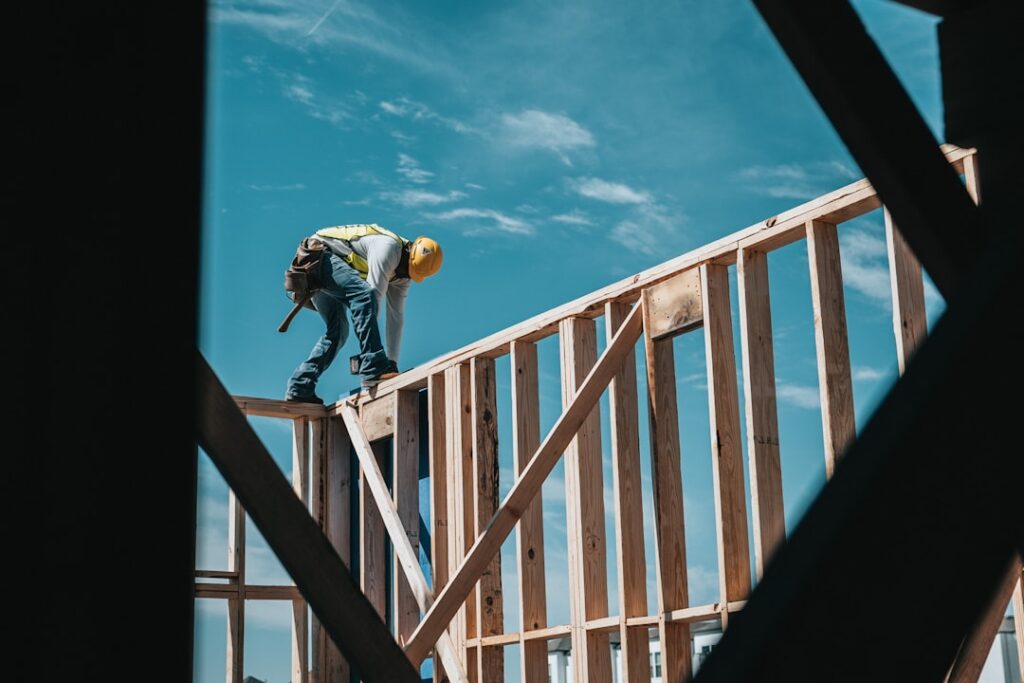
If you’ve never gone through the draw process on a construction loan before, the first time your lender describes it can feel like a lot. You’ve signed the docs, you’re ready to build — but the money isn’t sitting in your bank account waiting. It comes out in stages, tied to what’s actually been built and verified by someone who isn’t you or your contractor. That’s the construction draw schedule, and understanding how it works before you break ground can save you weeks of cash flow disruption mid-project.
According to the Mortgage Bankers Association’s 2026 CREF forecast, total commercial mortgage originations are expected to reach $805 billion this year — up 27% from 2025. Construction and development lending is a meaningful slice of that volume, which means more developers are navigating draw schedules right now than at any point in recent years. Getting this right matters.
This guide walks through how construction draw schedules work, what lenders look for before releasing each draw, and how to move through the process without creating delays that back up into your contractor relationships.
What You’ll Learn
- How a construction draw schedule controls the flow of loan funds
- Typical milestones and percentages for ground-up projects
- The documentation lenders require before releasing each draw
- What causes draw delays — and how to stay ahead of them
What Is a Construction Draw Schedule?
A construction draw schedule is a pre-agreed plan between the borrower and lender that defines when funds are released from the loan — and what construction milestones have to be completed to trigger each release. Rather than receiving the full loan amount at closing, you draw it down incrementally as work progresses on site.
The logic is simple: a lender isn’t going to hand over $3 million on a project that doesn’t exist yet. They want to see the foundation before funding framing, and framing before funding mechanicals. Every dollar disbursed is secured by something already built into the ground.
This structure also works in your favor. Paying interest on $3 million from day one would be expensive. With draws, you’re only accruing interest on funds actually disbursed — which, for a loan that includes a funded interest reserve, can mean no out-of-pocket interest payments until construction completes. More on that below.
How Many Draws Will Your Lender Require?
Most ground-up residential construction loans — single-family, townhomes, condos — run 4 to 7 draws. Commercial ground-up projects often run 5 to 10, particularly when there are complex mechanical systems, phased construction, or tenant improvement work built in.
Private lenders and debt funds tend to use fewer, larger draws. Banks and agency-adjacent lenders structure more granular draw schedules, often tying each release to specific Schedule of Values line items rather than general completion percentages. Know which type of capital you’re working with before the loan closes — it directly affects your cash flow planning.
We work with construction lenders across both structures. For a deeper look at how ground-up construction loans are underwritten — including LTC, interest reserve, and borrower requirements — that post covers the full picture.
Typical Construction Draw Schedule: Milestones and Percentages
Every lender’s draw schedule is different, but the milestones below represent a common structure for ground-up residential development. Percentages reflect the approximate share of total loan proceeds released at each stage.
| Draw | Milestone | Typical % of Loan |
|---|---|---|
| Draw 1 | Site work and foundation complete | 10–15% |
| Draw 2 | Framing and roof dry-in | 25–30% |
| Draw 3 | Mechanical, electrical, plumbing rough-in | 15–20% |
| Draw 4 | Drywall, insulation, windows complete | 15–18% |
| Draw 5 | Interior finishes, fixtures, cabinetry | 12–15% |
| Draw 6 (Final) | Certificate of occupancy issued | Remaining balance + retainage |
Retainage — typically 5–10% withheld from each draw — is released at final draw, usually concurrent with or just after the certificate of occupancy is issued. It’s the lender’s insurance against incomplete work, and it gives your GC incentive to finish what they started.
For townhome and condo projects, your draw schedule may shift to a unit-by-unit structure once vertical construction begins. The post on townhome construction loan structuring covers how phased draws work on for-sale residential development.
How the Draw Request Process Works, Step by Step
The mechanics of requesting a draw are consistent across most lenders, even if timelines vary. Here’s the sequence:
- Verify completion. Walk the job site and confirm the milestone genuinely meets the draw condition. Third-party inspectors will catch anything that doesn’t, and a failed inspection resets your timeline.
- Compile the draw package. This typically includes a draw request form (AIA G702 and G703 continuation sheet are standard), contractor invoices itemized against your Schedule of Values, and updated cost-to-complete figures for each budget line.
- Submit lien waivers. Conditional lien waivers from your general contractor and all material suppliers must accompany the draw request. Unconditional waivers from the prior draw are usually required at the same time. Missing lien waivers — especially from tier-two subcontractors — are the single most common cause of draw delays.
- Lender orders inspection. The lender dispatches a third-party inspector to verify percentage of completion against the draw schedule. Inspections typically complete within 2–5 business days of being ordered.
- Review and funding. Once the inspection report clears, the lender reviews and wires funds. Most private construction lenders target 2–3 business days for final review after inspection.
From a complete, clean submission to funds in your account, plan on 7–10 business days. Experienced developers submit draw packages 3–5 days before they need the money — not the day they need it.
What Lenders Look at Before Releasing Funds
The inspection is the core verification event, but lenders are checking several other things simultaneously:
- Budget compliance. Is cost-to-complete still tracking with the original proforma? A material overrun in any line item flags risk of a funding shortfall at completion.
- Schedule compliance. Most construction loans run 12–24 months. A project running 30% behind schedule in month six will draw scrutiny from the lender before the next draw is released.
- Lien releases. The lender’s title company verifies that lien releases have been properly filed before funds go out. If a subcontractor files a mechanics lien because they weren’t paid from a prior draw, it stalls the next draw until it’s resolved.
- Insurance coverage. Builder’s risk insurance must remain current throughout construction. A lapsed policy can hold a draw entirely.
The best developers I’ve worked with treat every draw cycle like a clean presentation to the lender — organized, complete, and proactive. The ones who scramble create delays that ripple into their GC and sub relationships downstream.
The Interest Reserve: How Lenders Handle Loan Payments During Construction
Most construction lenders don’t require out-of-pocket interest payments during the build period. Instead, they fund an interest reserve at closing — a separate account within the loan that auto-pays your accrued interest each month as draws are funded.
The reserve is calculated based on the projected draw schedule, the average outstanding loan balance during construction, and the note rate. On a 12-month build, expect the interest reserve to equal roughly 8–12% of the total loan amount.
Here’s the part that catches first-timers off guard: the interest reserve is included in your total project budget and your loan-to-cost calculation. If your lender is at 75% LTC on a $2M project, the $1.5M loan has to cover hard costs, soft costs, and the interest reserve. The interest payments aren’t free — they’re borrowed from day one and come out of your loan proceeds.
From a recent deal: I recently structured a ground-up construction loan for a developer building four townhomes in the Charlotte market. The borrower had a strong contractor, a clean proforma, and solid credit — but hadn’t budgeted the interest reserve as part of total project cost. We caught it before the appraisal came back and restructured the budget to include a fully funded 12-month reserve, meaning no out-of-pocket payments during the build. The lender covered it within the LTC; the borrower brought slightly more equity to closing but preserved their operating liquidity through the entire build.
Structuring a ground-up project and want to get the draw schedule right from the start? We work with construction lenders nationally across residential and commercial development. Schedule a 15-minute call →
What Causes Draw Delays — and How to Avoid Them
In my experience, draw delays are almost always on the borrower or contractor side, not the lender. Here are the four most common causes:
- Missing lien waivers. Tier-two subs and material suppliers often lag behind GC paperwork. Build a standing requirement into your contractor’s payment process: no sub gets paid without submitting a lien waiver first.
- Inspector scheduling in hot markets. Third-party inspectors in active construction markets sometimes book out 5–7 business days. Submit draw packages before the milestone is 100% complete when your lender allows advance ordering — many do.
- Incomplete packages. A missing document sends the request back to start. Use a submission checklist every time: draw form, contractor invoices, lien waivers, budget update, cost-to-complete, current insurance certificate.
- Undisclosed budget overruns. If you’ve exceeded a line item, your lender will ask for an explanation before releasing the next draw. Flag overruns proactively — a brief email to your loan officer before you submit keeps the relationship clean and the review moving.
Per the MBA’s Q1 2026 Commercial/Multifamily Originations Index, commercial and multifamily borrowing increased 52% year-over-year in the first quarter of 2026. That surge in activity means construction lenders are processing more draw requests with the same compliance infrastructure — which makes well-organized packages stand out even more.
After the Last Draw: What Comes Next
Once the final draw is funded and the CO is issued, your construction loan is fully funded and typically due within 6–12 months. At that point, you have a few paths:
- Construction-to-permanent financing: Some lenders build a permanent loan feature directly into the construction loan structure. At completion, you transition to a long-term note at a pre-agreed rate without a new appraisal or full underwrite. The guide on construction-to-permanent loans covers when this option makes sense and how it’s typically structured.
- Mini-perm bridge: A short-term bridge loan (usually 2–5 years) gives you time to stabilize, lease up, or wait for the permanent market to improve. This is common in multifamily development where agency debt requires a certain occupancy threshold before qualifying. The post on mini-perm loans walks through typical terms.
- Sale at completion: For for-sale residential development — townhomes, condos, SFR — you deliver units, collect proceeds, and pay off the construction note. The draw schedule is designed to keep enough construction funding flowing that you reach sellable inventory without a cash gap.
The exit strategy has to be part of the conversation before you close the construction loan — not something you figure out at CO. Lenders think about it during underwriting; your terms may reflect which exit they expect.
Frequently Asked Questions
How long does it take to get a construction draw funded?
From a complete, clean submission, most construction lenders fund within 7–10 business days. Inspection takes 2–5 days; lender review after inspection typically takes 2–3 business days. Incomplete draw packages reset the clock, so complete documentation on the first submission is worth prioritizing.
Can I negotiate the draw schedule with my lender?
Often yes, especially with private lenders and debt funds. The draw schedule is typically negotiated as part of the loan commitment. If your project has unusual phasing — heavy MEP costs early, or site work that runs longer than typical — flag it during underwriting and request milestones that reflect your actual build sequence.
What happens if my construction costs exceed the original budget?
Cost overruns require an approved budget modification before the lender will release funds beyond the original commitment. Some lenders hold a contingency reserve inside the loan for this scenario. If overruns exceed any contingency, you may need to contribute additional equity to cover the gap — a strong reason to build a realistic 5–10% contingency into the budget before you close.
What is retainage in a construction draw schedule?
Retainage is a percentage — typically 5–10% — withheld from each draw and held back until the project reaches final completion and the certificate of occupancy is issued. It’s the lender’s buffer against incomplete work and is released with or just after the final draw.
Ready to finance your ground-up project?
We’re a commercial mortgage brokerage serving developers and investors nationally, with active lender relationships across ground-up construction, bridge financing, and construction-to-permanent programs. Send us your scenario — we’ll respond within one business day with realistic terms.
This article is for informational purposes only and does not constitute financial, legal, or tax advice. Loan terms, rates, and availability vary by borrower, property, and market conditions. Consult Willowbrook Capital for scenario-specific guidance.
