
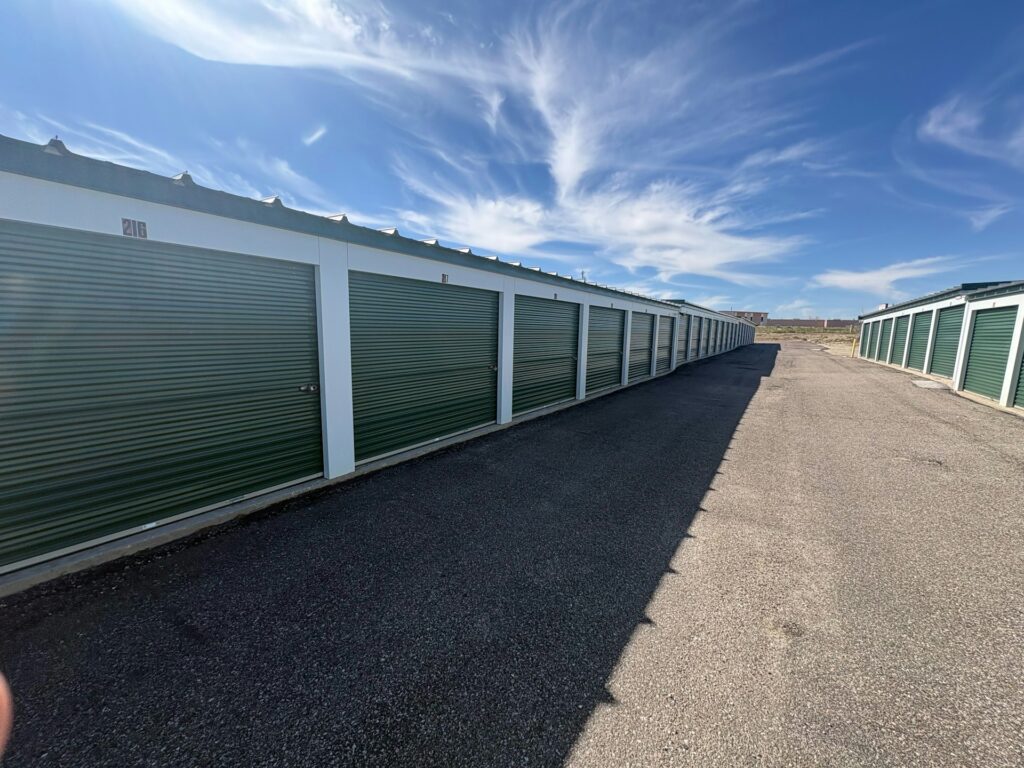
A self storage construction loan is one of the harder ground-up loans to place right now. Lenders like the asset class, but they have watched new facilities in oversupplied submarkets take longer to fill than the pro forma said. So the question is no longer just “will a lender fund storage?” It is “will a lender believe your lease-up?”
Here is how lenders size a self-storage construction loan in late 2026, how much equity to plan for, which programs fit which deals, and what gets a file approved.
What Is a Self-Storage Construction Loan?
It is short-term financing that funds land (or refinances it), hard costs, soft costs, and an interest reserve to build a new storage facility. The loan funds in draws as work is completed, is usually interest-only, and runs 24 to 36 months with extension options.
The construction loan is not the end of the capital stack. You will refinance it with a mini-perm, bridge, SBA, or permanent loan once the facility is open and leasing. Lenders underwrite that exit from day one, so your lease-up plan matters as much as your construction budget.
If you are buying or refinancing an operating facility instead of building one, see our guide to the self storage loan options for stabilized properties.
How Much Equity Does a Self-Storage Construction Loan Require?
Plan on 30% to 40% of total project cost for a conventional deal. Most construction lenders I work with land between 60% and 70% loan-to-cost on ground-up storage, and they cap the loan at a lower percentage of stabilized value as a second test. Whichever number is smaller sets your loan.
That matches what lenders are publishing. A June 2026 piece in Modern Storage Media, written by a self-storage lending director, said new ground-up development may need 35% or more of total project costs as equity, with a 10% contingency often required and stabilization taking 24 to 36 months.
Land you already own counts toward equity, usually at the lower of cost or appraised value. Lenders will also trace cash equity, so expect them to ask where the money came from and how long it has been in your account.
What lenders look at beyond leverage
- Sponsor experience. Prior storage development or operating history is the single biggest factor. First-time developers usually need an experienced partner or a third-party management company.
- Feasibility study. A third-party study covering supply within three to five miles, rents, and absorption is standard.
- Interest reserve. Sized to carry the loan through construction and lease-up until the property breaks even.
- Guarantees. Expect a completion guarantee and a personal guarantee. Some lenders allow recourse to burn down once occupancy and coverage hurdles are met.
- Rent assumptions. Lenders haircut projected rents and strip out annual increases during lease-up.
Why Lenders Are Cautious on Storage Construction in 2026
Supply and rents. According to CRE Daily’s summary of the Yardi Matrix October 2026 report, national advertised self-storage rates fell 1.8% year over year in September, to $16.21 per square foot, and declined in all 30 major metros tracked. Projects under construction equaled 2.1% of existing inventory, with deliveries over the past three years totaling 8.7% of stock.
The good news for new projects is that supply is slowing. StorageCafe, using Yardi Matrix data, projected about 55.4 million square feet of new storage in 2026, or 2.6% of inventory, well below the 70-million-plus years of 2018 and 2019, per its 2026 supply report. Florida, Texas, and California lead the deliveries, and Phoenix and Miami are among the top metros.
What this means for your loan: lenders will underwrite your submarket, not the national average. A site with little competing supply within three miles is a much easier approval than one next to two new facilities still leasing up.
Rates matter too. The Federal Reserve held its target range at 3.75% to 4.00% at its October 28, 2026 meeting, after raising it in September, per the Fed’s statement. Most construction loans float, so carry cost and the interest reserve both rise with short-term rates.
From a recent deal: I recently worked with an operator in the Southeast who wanted to build a climate-controlled facility on land he had owned for several years. His first lender sized the loan off a two-year lease-up and pushed back hard. We repackaged the file with a feasibility study showing thin competing supply within three miles, moved to a lender that underwrote a 30-month lease-up with a larger interest reserve, and counted his land at appraised value toward equity. He ended up at roughly 65% loan-to-cost with less new cash than he expected to bring.
Planning a ground-up storage facility? We structure these deals nationally. Schedule a 15-minute call →
Self-Storage Construction Loan Options Compared
The right program depends on deal size, your experience, and whether you will operate the facility yourself.
| Program | Best for | Leverage | Watch out for |
|---|---|---|---|
| Bank construction loan | Experienced local sponsors, $3M-$25M projects | About 60-70% LTC | Full recourse, floating rate, deposit requirements |
| SBA 504 | Owner-operators who will run the facility | Highest leverage of the group | Longer timeline, personal guarantees, CDC approval |
| SBA 7(a) | Smaller facilities, land plus build | High | Loan size limits, variable rate |
| Debt fund / bridge construction | Larger projects or tighter timelines | Similar to bank, sometimes higher | Higher rate and fees, shorter term |
Can you use an SBA loan to build self-storage?
Often, yes, when the borrower is an operating business that will run the facility. SBA’s 504 program page describes long-term fixed-rate financing with 10-, 20-, and 25-year terms, priced off the 10-year Treasury, and excludes speculation or investment in rental real estate. How a CDC and bank treat a storage project depends on the operating structure, so confirm eligibility early. New construction can also raise the required down payment above the standard 504 level.
For more on how the two SBA programs differ, read our comparison of SBA 504 vs 7(a).
How the Exit Works After Construction
Most storage construction loans are refinanced before the facility is fully stabilized. The usual path is a bridge or mini-perm loan once the certificate of occupancy is issued and occupancy is climbing, then permanent debt once the facility hits stable occupancy and coverage.
Build that timeline into your budget. If lease-up runs six months long, the interest reserve is what keeps you current. I walk through how reserves are sized in our guide to the interest reserve on construction loans, and the tradeoffs between short-term products in construction loan vs. bridge loan.
Frequently Asked Questions
How much down do you need for a self storage construction loan?
Plan on 30% to 40% of total project cost for conventional financing. SBA programs can require less from owner-operators, and land you own counts toward the equity.
How long does self-storage lease-up take?
Lenders commonly underwrite 24 to 36 months to stabilization, and longer for large facilities or submarkets with heavy new supply.
Can a first-time developer get a self-storage construction loan?
It is difficult without help. Lenders prefer proven operators, so first-time developers usually partner with an experienced sponsor or hire a third-party management company.
Are self-storage construction loans recourse?
Usually. Expect a completion guarantee and a personal guarantee, with some lenders offering a burn-down once the property hits occupancy and coverage targets.
Ready to finance your self-storage development?
We’re a commercial mortgage brokerage serving investors, developers, and business owners nationally, with active lender relationships across bank construction, SBA 504 and 7(a), debt fund, and bridge programs. Send us your site, budget, and feasibility study, and we’ll respond within one business day with realistic terms.
This article is for informational purposes only and does not constitute financial, legal, or tax advice. Loan terms, rates, and availability vary by borrower, property, and market conditions. Consult Willowbrook Capital for scenario-specific guidance.
