
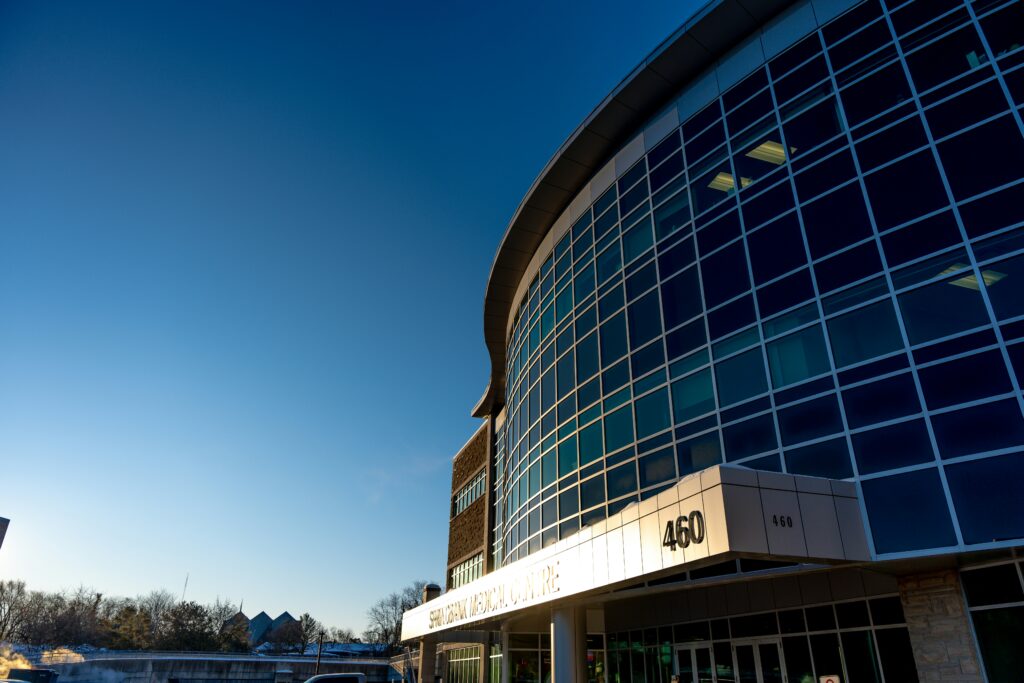
A family medicine physician I spoke with earlier this year had been leasing the same 2,800-square-foot office suite for eleven years. Her rent had climbed from $4,200 to $7,100 a month — and her landlord had just announced another increase. She came to us thinking she’d need 25–30% down to buy her own space. She was wrong. An SBA loan for her medical office got her into a building with 10% down and a rate fixed for 25 years. Her new mortgage payment was $400 less than her last rent check.
If your practice is leasing space, that math deserves a serious look.
- Which SBA program — 504 or 7(a) — fits a healthcare real estate purchase
- Current 2026 rates and down payment requirements
- How lenders underwrite medical practice borrowers
- A 2026 rule change that lets practices combine programs for up to $10M in SBA-backed financing
Who Can Use an SBA Loan to Buy a Medical Office?
SBA real estate loans fall under the owner-occupied commercial category. The business buying the property must actually occupy it — for SBA 504 loans, you need to use at least 51% of the financed space for your practice. SBA 7(a) has similar intent, though there’s some flexibility depending on the deal structure.
The range of eligible practice types is wider than most people expect. Physicians, dentists, orthodontists, optometrists, chiropractors, physical therapists, podiatrists, veterinarians, and behavioral health providers all qualify. So do outpatient clinics, urgent care centers, and specialty practices — dermatology, orthopedics, oncology infusion suites, and similar.
What doesn’t qualify: a medical office building you’re buying purely as a rental investment with no practice occupancy. That’s a commercial investment deal, not an SBA loan. The occupancy requirement is real, and lenders verify it. If you’re a healthcare investor rather than a healthcare operator, financing a medical office building as an investment property works differently and involves conventional commercial programs.
SBA 504 vs. SBA 7(a) for Medical Office Real Estate
Both programs work for medical office purchases. The right choice depends on project size, what you’re financing beyond the real estate, and whether you want a fixed rate or can accept variable.
| Feature | SBA 504 | SBA 7(a) |
|---|---|---|
| Best use | Real estate purchase or construction | Acquisitions mixing real estate + goodwill + equipment |
| Loan structure | Two loans: bank (50%) + CDC (40%) | One loan, one lender |
| Down payment | 10% (established practice) | 10–15% |
| Rate type | Fixed (CDC portion) | Variable (tied to prime) |
| CDC portion rate (Aug 2026) | 6.19–6.27% fixed | N/A |
| Max SBA exposure | $5.5M (CDC portion) | $5M |
| Term on real estate | 20 or 25 years | Up to 25 years |
| Working capital allowed? | No | Yes |
My default recommendation for pure real estate purchases is the 504 — the fixed rate, the 25-year term, and the low down payment are hard to beat. The 7(a) earns its place when the deal includes equipment, goodwill from a practice acquisition, or working capital that the 504 can’t touch.
How the SBA 504 Works for Healthcare Real Estate
The 504 is a two-loan structure. A bank provides 50% of the project cost at conventional pricing. A Certified Development Company (CDC) provides 40% at a fixed rate backed by the SBA. You put in 10%. Total project costs can include purchase price, closing costs, and certain eligible soft costs.
The CDC portion is priced off Treasury rates and fixed at funding. As of the August 2026 debenture sale, the CDC rate was 6.19% on 10-year maturities and 6.27% on 20- and 25-year maturities, per SBA 504 program data. That rate doesn’t move for the life of the loan.
The bank’s 50% piece prices separately at market rates — typically 7–9% in the current environment. Most owner-occupied medical office purchases through 504 blend to an effective rate of 7.0–8.0% across both pieces combined, depending on credit, property type, and the bank’s pricing.
One important nuance: the 504 cannot fund working capital. It’s strictly for fixed assets — real estate, construction, or major equipment. If your deal includes buying out a retiring partner or funding a leasehold buildout, you’ll need to pair the 504 with another facility. (More on that in the combined-financing section below.)
For a deeper look at how the 504 structures real estate projects, we wrote a full breakdown: SBA 504 loans for owner-occupied commercial real estate.
How the SBA 7(a) Works for Medical Office Purchases
The 7(a) is more flexible: one loan, one lender, up to $5 million. The rate is variable, tied to the bank prime rate. As of August 6, 2026, the prime rate stood at 6.75% per the Federal Reserve H.15 release. The SBA caps lender spreads above prime based on loan size — for loans above $350,000, the maximum spread is 3.0%, putting the current rate ceiling at 9.75%.
The 7(a) is the program I reach for when the purchase involves more than just real estate. Practice acquisitions often come with equipment, patient records, goodwill, and the need for startup working capital — none of which the 504 can cover. The 7(a) bundles all of that into one closing.
Terms go up to 25 years on real estate. Working capital and equipment components carry shorter terms — typically 7–10 years. Most lenders will structure the amortization based on the use of proceeds.
If you want a side-by-side on both programs beyond the medical context, see our full SBA 504 vs. 7(a) comparison guide.
What Lenders Look For in a Healthcare Borrower
SBA medical office loans are underwritten on both the practice and the real estate. Here’s what moves the needle:
Credit score. Most SBA lenders want a minimum 680 personal credit score for the guarantor(s). Above 720 opens more doors. Below 680 doesn’t automatically disqualify, but expect more documentation and tighter terms.
Time in practice. Two years of operating history is the standard threshold for “established practice” status, which unlocks the 10% down payment. Startups and practices under two years old typically need 15% down and face tighter cash flow scrutiny.
Practice cash flow. Lenders will underwrite your practice’s ability to cover both the new mortgage payment and existing debt. They’re not just lending against the building — they’re lending against the operating business behind it. Two to three years of tax returns is standard, along with year-to-date financials.
Property type. Standard medical office is a straightforward SBA collateral class. Purpose-built or highly specialized spaces — surgical suites, dialysis centers, radiation oncology facilities — may be treated as special-use properties by some lenders, which can trigger the higher 15% down requirement. Most general-practice offices, dental offices, and outpatient spaces don’t hit this threshold.
Global debt service. Your personal global income (practice income plus any other sources) must support your personal obligations plus the business debt. SBA lenders typically want 1.15x–1.25x global DSCR.
Buying or refinancing your practice’s office space? We structure SBA 504 and 7(a) deals for healthcare borrowers nationally. Schedule a 15-minute call →
From a Recent Deal
From a recent deal: I placed a 504 loan for a two-physician internal medicine group in the Nashville market who were buying a 3,600-square-foot condo unit in a medical office park — the building they’d been leasing space in for six years. Project cost came in at $1.1M. The bank funded $550K at about 7.75%; the CDC funded $440K at the then-current fixed rate; the practice put in $110K at closing. Monthly payment ran roughly $6,800 all-in, versus $9,200 in rent. We closed in 68 days from application. The main friction was getting the condo association’s HOA documents cleared for SBA — that took three weeks on its own.
The 2026 Combined 504 + 7(a) Rule
Effective July 4, 2026, the SBA now allows borrowers to use both a 504 and a 7(a) loan simultaneously — up to $10M in combined SBA-backed financing. This change matters for healthcare practices with complex capital needs.
A practical example: a dental practice buying a $1.8M building through 504, while simultaneously using a $400K 7(a) for equipment and working capital. Previously, stacking these programs wasn’t allowed. Now it is, and the combined facility can make a significant difference in how much liquidity the practice retains at closing.
The programs still underwrite independently — you’ll go through two separate approvals — but they can be coordinated as part of a single transaction strategy. We’ve started seeing this structure used for practices doing real estate acquisitions alongside partnership buyouts or major equipment upgrades. If your deal has moving parts beyond just the building, it’s worth exploring.
For SBA real estate deals involving industrial or mixed-use healthcare/warehouse properties, take a look at our SBA warehouse and industrial loan guide as a reference for how similar owner-occupied structures work.
Frequently Asked Questions
Can a physician use an SBA loan to buy a medical office building?
Yes, as long as the practice occupies at least 51% of the property. Both SBA 504 and 7(a) are available for owner-occupied medical office purchases. The practice must be a for-profit entity and meet SBA small business size standards.
What is the down payment for an SBA loan on a medical office?
Established practices (two or more years in operation) can get into a medical office with 10% down through either program. Startups or properties classified as special-use typically require 15%.
What’s the difference between SBA 504 and 7(a) for a medical office purchase?
SBA 504 is best for straight real estate purchases — it offers a fixed rate on 40% of the project and longer terms, but can’t fund working capital. SBA 7(a) is more flexible, covering real estate alongside equipment and working capital in one loan, but at a variable rate. For pure property purchases, 504 usually wins on economics. For mixed acquisitions, 7(a) often makes more sense structurally.
How long does an SBA medical office loan take to close?
SBA 7(a) loans typically close in 30–60 days for clean files. SBA 504 closings run 60–90 days because the CDC approval layer adds a step. If your purchase contract is tight on time, that’s a real consideration in program selection. I’ve closed 504 deals in 55 days on straightforward files and watched 7(a) deals drag to 75 days on complex ones — the range is real.
Can I use an SBA loan to refinance a medical office I already own?
Yes, with conditions. SBA 504 has a refinance program that can convert conventional commercial debt into a fixed-rate 504 structure, provided the debt was used to acquire or improve the property. SBA 7(a) can also refinance existing business real estate debt. Both programs have occupancy and age-of-debt requirements — it’s worth running your specific scenario to confirm eligibility.
Ready to finance your practice’s real estate?
We work with healthcare borrowers nationally on SBA 504 and 7(a) real estate transactions. Send us your scenario — we’ll come back within one business day with a realistic read on what you’d qualify for and which program fits.
This article is for informational purposes only and does not constitute financial, legal, or tax advice. Loan terms, rates, and availability vary by borrower, property, and market conditions. Consult Willowbrook Capital for scenario-specific guidance.
